
The Urdu poetry is the heartbeat of love. Through the earliest classical poets up to the contemporary authors, love (shq / mHbt) has been the most influential, emotional and highly exploited theme. Urdu poetry does not consider love as mere emotion; it introduces love as full philosophy of life, which is sometimes ecstatic, sometimes agonizing, and always changing.
This stepwise guide will cover the meaning of love through the Urdu poetry, its description by the poets, its various shades, and the reason of why it still finds its way into the hearts of people of all generations.
Love as the Soul of Urdu Poetry
Urdu poetry was conceived in emotions and love is its greatest emotion. Love in the Urdu literature is not necessarily romance between two individuals, it is a long-ing, sacrifice, separation, patience, loyalty, and even a rebellion. Poets define love as the one that develops the identity of the person.
For centuries, poets have used love to express:
- Inner pain and emotional struggle
- Hope and devotion
- Loss and separation
- Spiritual awakening
In Urdu poetry, love often becomes a test of character rather than a source of comfort.
The Meaning of Love (عشق) in Urdu Poetry
Ishq (`shq) is a much deeper word than the English word love. It is a passionate love, dedication and total submission. Urdu poets tend to demonstrate that true love is something that requires sacrifice and selflessness.
One of the well-known Urdu poetic thoughts is that love is not easy. The lover has to suffer, wait, be silent and rejected. This pain is, however, not depicted as ugly and meaningless.
عشق وہ نہیں جو حاصل ہو جائے
عشق وہ ہے جو صبر سکھا دے
This belief makes Urdu love poetry emotionally rich and timeless.
Romantic Love in Urdu Poetry
The love most evident and emotional in Urdu poetry is romantic love. It is a manifestation of tender emotions, strong attraction, sincere feelings, whereby love is experienced rather than expressed. This type of poetry puts romance as something fierce, sensitive and mostly incomplete, thus, feelings are more powerful and memorable to the reader. It focuses on:
-
The beauty of the beloved
-
The pain of unfulfilled desires
-
Secret meetings and silent glances
-
The fear of losing the beloved
Unlike modern romance, Urdu poetry often shows love as incomplete. The beloved is distant, proud, or unreachable, which makes love more intense.
Poets describe eyes, smiles, silence, and even cruelty of the beloved with deep emotional detail.
Pain and Separation: A Central Theme
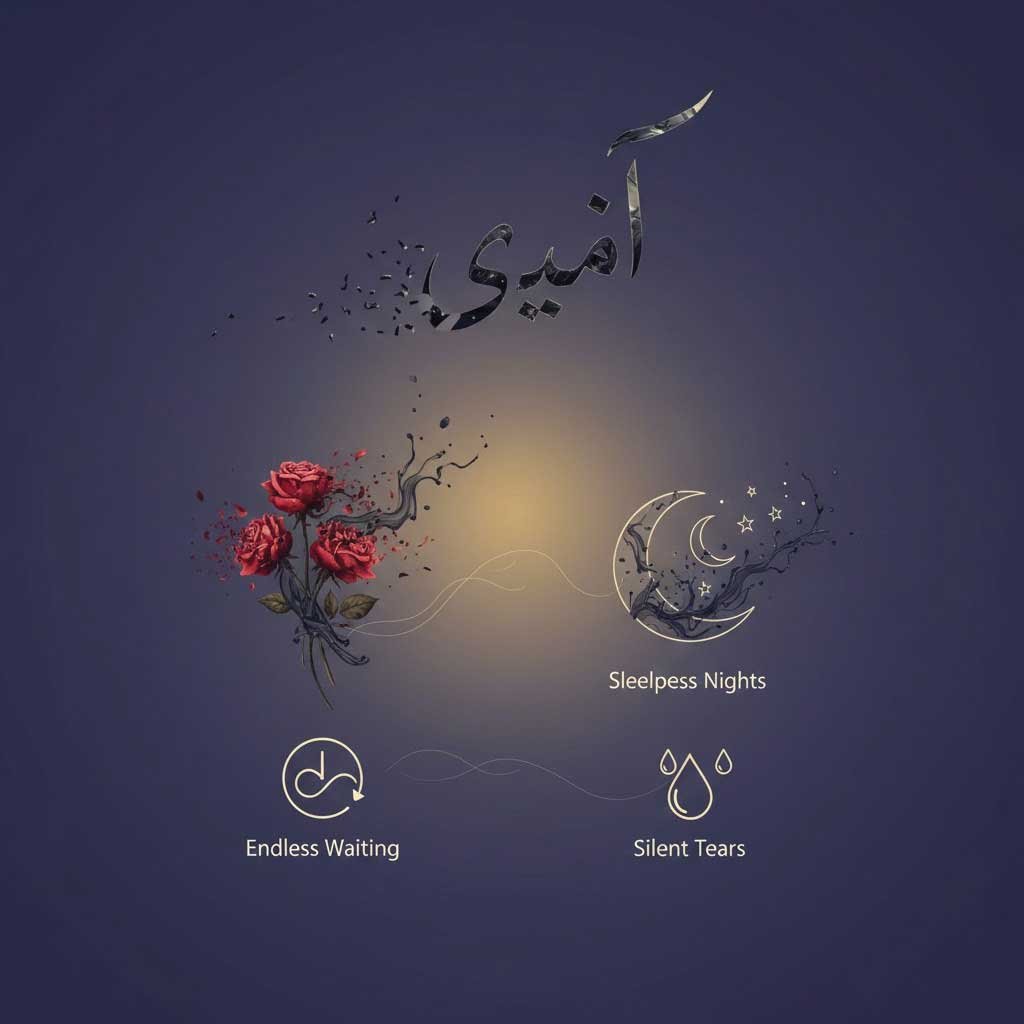
In Urdu, love poetry is centered on pain and separation, which is why poets think that only distance, separation and longing can help bring forth the real depth of true love. Separation (jdy’y) turns love into a force of emotional experience where patience and endurance are the signs of the sincerity and devotion. Separations have been characterized as painful in the following way:
-
Sleepless nights
-
Endless waiting
-
Silent tears
-
Memories that refuse to fade
This sorrow is not shown as weakness; instead, it becomes proof of true love.
جدائی کا دکھ ہی تو عشق کی پہچان ہے
Spiritual Love in Urdu Poetry
Urdu poems tend to confuse human and divine love in a very beautiful way and both are equally intense and devoted. The language of romance, longing, and passion was one of the symbolic languages of many classical poets who wanted to represent their love to God and make spiritual connection very personal and very emotional, in which the beloved one becomes the symbol of God connection and his/her everlasting love.
In this form of poetry:
- The beloved becomes God
- The lover becomes a seeker
- Separation becomes spiritual distance
- Union becomes enlightenment
Poets like Bulleh Shah and Mir Taqi Mir used love as a path toward spiritual truth.
Love as Madness and Rebellion
Urdu poetry often gives love an aspect of insanity (dywngy), when strong feelings prevail over reason and logic. A real lover is also depicted as a person who voluntarily puts aside comfort and control to make his or her identity and decisions to be reformed by love. This kind of a lover is portrayed as one that:
-
Defies society
-
Breaks traditions
-
Accepts humiliation
-
Loses concern for reputation
Love turns ordinary people into rebels. This idea makes Urdu love poetry bold, fearless, and emotionally powerful.
Classical vs Modern Love in Urdu Poetry
The Urdu poetry about love has undergone changes with time, yet the emotion in the poetry has been everlasting. Symbolic, idealized expressions are applied in classical poetry, whereas in modern poetry, particular expressions are straightforward and close to the reader. Although there are differences in style and language, both are still appealing to the readers as evidence that the nature of love does not change.
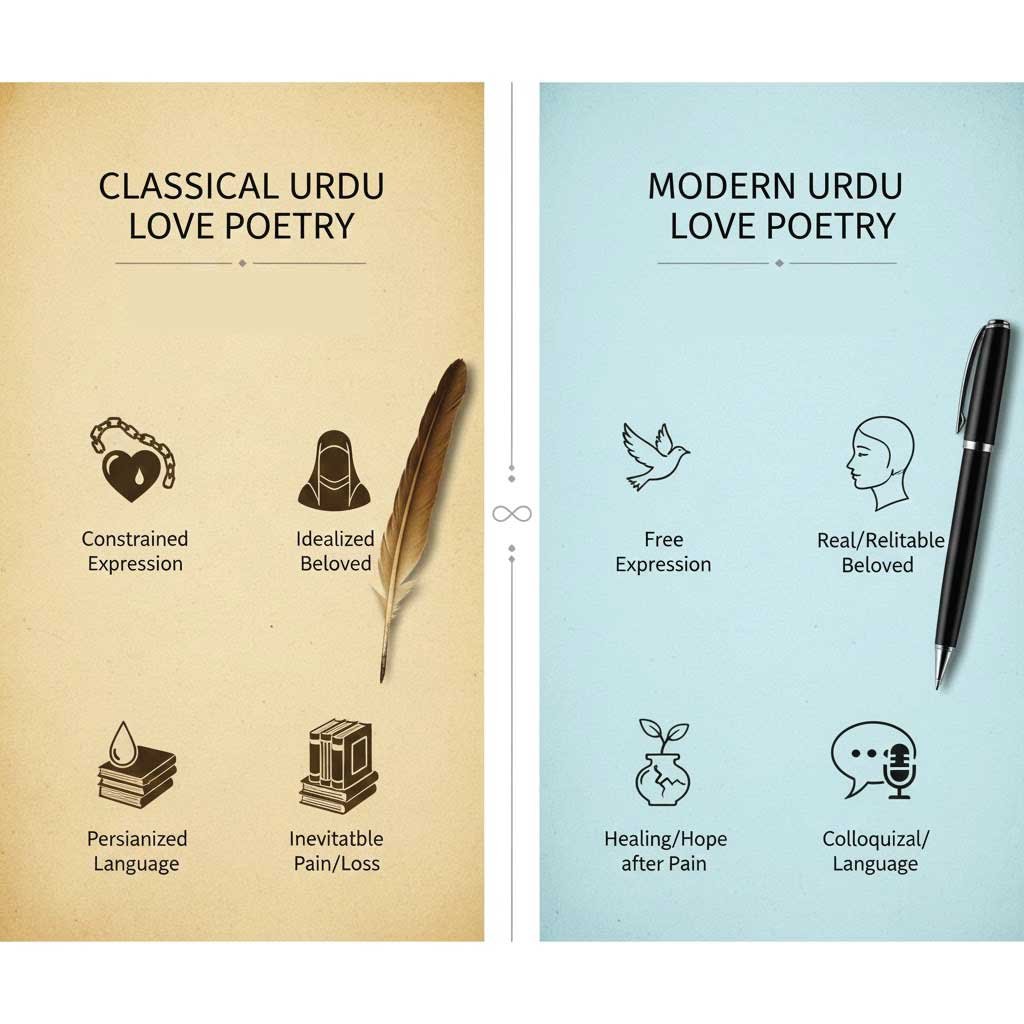
| Aspect | Classical Urdu Poetry | Modern Urdu Poetry |
|---|---|---|
| Expression | Symbolic and metaphorical | Direct and realistic |
| Beloved | Distant and idealized | Human and relatable |
| Pain | Glorified and poetic | Psychological and emotional |
| Language | Traditional and rich | Simple and conversational |
Both styles continue to attract readers because love itself never changes—only its expression does.
Famous Poets and Their View of Love
Urdu poetry is also made rich by the poets who discussed the subject of love in distinct emotional dimensions which brought depth and diversity to how love is expressed. The definition of love in each poem was based on the experience of the poet, his or her philosophical ideas, and social consciousness. Love was perceived by different poets in various emotional terms:
Mirza Ghalib saw love as painful yet necessary for self-discovery
Faiz Ahmed Faiz connected love with social injustice, resistance, and hope
Jaun Elia portrayed love as loss, regret, and raw emotional honesty
Ahmed Faraz presented love as bold, romantic, and rebellious
Each poet added a new emotional layer to Urdu love poetry, making it richer and more timeless.
Love and Silence in Urdu Poetry
Silence is an influential and significant part of Urdu love poetry, which is also prone to expressing feelings that cannot be described by other words. Most poets feel that love has most profound expressions that are too fragile or too passionate to be uttered. Silent words, unspoken feelings, and silent pain are depicted to be more powerful and more honest than loud pronouncing the love. Silence is a language on its own through pauses, restraint, and inner pain. It portrays tolerance, faithfulness, and emotion, and love becomes more truthful and permanent.
This concept gives Urdu poetry its soft yet intense emotional impact.
خاموش محبت سب سے گہری ہوتی ہے
Feminine Voice and Love:
Urdu poetry has provided a voice to the feelings of women with a strong and confident voice, making female poets to redefine love in their own way. Love is no longer depicted in poetry as silent sacrifice on its own but as self-respect, emotional understanding, and individual decision.
The women poets portray love as a willful act instead of devotion and the dignity and inner strength are equally important in love as much as affection.
This change has introduced sanity, sincerity and realism in the Urdu love poetry and rendered it more accommodative, identifiable and closer to the genuine emotional experiences.
Why Love in Urdu Poetry Feels So Deep:
Love in Urdu poetry is so touching as it directly appeals to the heart with such simple words and immensely meaningful words. Urdu poets do not conceal feelings and instead, they celebrate them, and they do not consider pain as a weakness but an extension of love.
Trueness, longsuffering, and inner patience are more appreciated than fast joy. Love depicts no hurry and takes time in its forms of longing, silence, sacrifice.
This slow pace gives time to emotions to sink in and gives a reader a long-lasting emotional impression as a deep impact on his heart and memory.
Emotional Elements of Love in Urdu Poetry
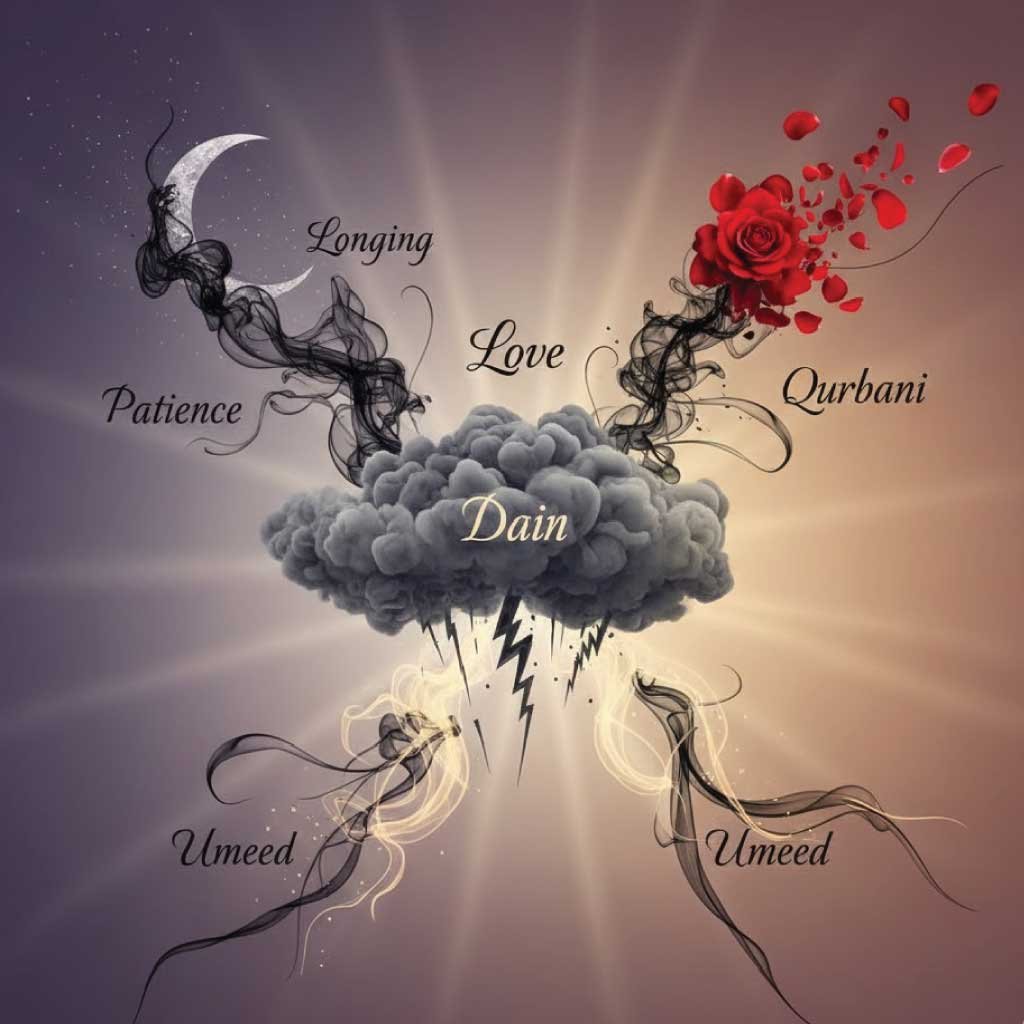
| Emotion | Description |
|---|---|
| Longing | Desire to meet the beloved |
| Patience | Waiting without complaint |
| Sacrifice | Giving without expecting |
| Pain | Emotional suffering |
| Hope | Belief in union |
These emotions work together to create the powerful emotional world of Urdu love poetry.
Love Beyond Time and Age
Love poetry is one of the most beautiful qualities of Urdu and it does not seem to be old or outdated. The emotions that people feel nowadays (love, longing, pain, hope), are traced in the poems written long ago.
The emotions of the classical poets are not lost in the present time, and they bind the hearts of people of different generations.
The reason why people still read and spread Urdu love poetry is because it is the pure truth of the heart and this truth cannot be affected by time, culture or shifting lifestyles.
Conclusion: The Eternal Meaning of Love in Urdu Poetry
So, what is love in Urdu poetry? It is devotion, pain, patience, madness, silence and hope all these are combined as potent words.
Urdu poetry does not have any happy endings, but it has emotional truth. Love is depicted as something that can break you and at the same time make you.
That is the reason why the Urdu love poetry exists in hearts and continue to exist in gatherings, books and on the social media – because love when written in Urdu is eternal.
🖊️ Discover the enchanting world of Urdu poetry! This post dives into the beauty, depth, and meaning of Urdu poetry, exploring its emotions, themes, and timeless expressions of love, longing, and life. Whether you are a beginner or a poetry lover, this guide will help you truly appreciate the art and soul of Urdu poetry. Read the full post now!

Hassan Nigaar is an Urdu poetry writer and literary content creator with a strong interest in both creative and educational aspects of Urdu literature. Along with writing and curating 2-line Urdu poetry, he also creates informative content on learning poetry techniques and explores the lives and works of famous Urdu poets. Through 2LinesPoetry.com, his goal is to promote Urdu poetry, literary awareness, and cultural appreciation for readers around the world.