
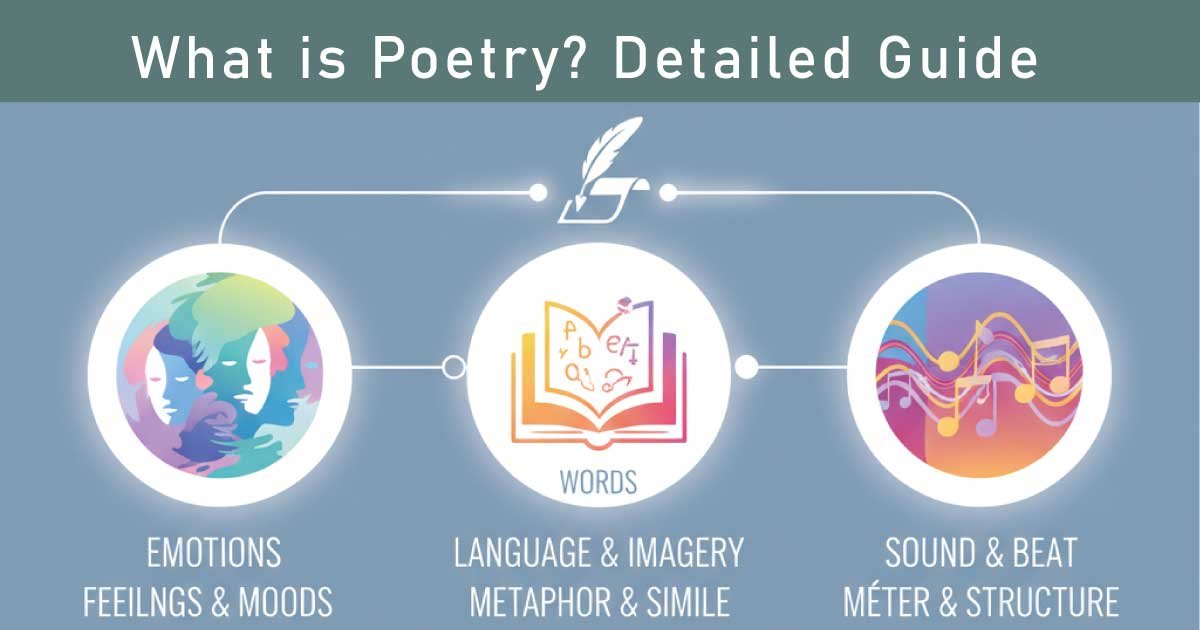
Poetry is a form of human communication, which is one of the oldest and most expressive. Fundamentally, poetry is the art of expression of thoughts, emotions and ideas using words selected with caution. Poetry, unlike ordinary prose, tends to have rhythm, sound, image, and metaphor to provide the reader with a more in depth connection. However, poetry is not only about rhymes or the form, it is about emotions that it leaves and ideas it conveys.
Poetry conveys the sense of human experience in a succinct and concentrated form, a mixture of love and heartbreak, sorrow, and social commentary. Poets have always made our words inspire, make us think or it is just that they say the things that cannot be easily said with ordinary words.
The Origins of Poetry
Poetry is thousands of years old, way before the writing was invented. Early mankind resorted to rhythms, songs and oral narrations as the means of preserving history, sharing knowledge and amusing themselves. When poetry was an art form, these oral traditions were the basis that it was based on. Poetry has been known by ancient people, both the Mesopotamians and Egyptians as well as the Greeks and the Chinese, as an essential element of the culture and society.
An example of this is the Greeks who came up with a formal structure and meter of poetry, such as the Homeric epic poems. Sanskrit poetry thrived in India with elaborate meters and religious motives. In the same way, Persian, Arabic and Urdu literature expanded and developed throughout centuries drawing the beauty of forms and culture. Poetry has been the same, it has always transcended the limits of languages and cultures and united people through a common feeling.
Why Poetry Matters
Poetry is important in that it enables us to express complicated feelings in simple but deep manner. It gives expression to some feelings that are usually not spoken. One or two lines of poetry can express the intensity of love, sorrow, hope or inspiration much better than paragraphs of mundane writing.
Here are some reasons why poetry remains relevant even today:
Emotional Expression – Poetry lends expression to feelings that cannot be expressed easily. Even an extremely brief poem may make a person feel heard, inspired, or comforted.
Creativity and Imagination – Poetry writing and reading is a mind-stimulate activity. It fosters innovative thinking, fantasy and different thinking.
Cultural and Historical Preservation – Poetry has been the instrument to make traditions, social problems, and historical events known. We get to know the thought and lives of people live in different times through poems.
Therapeutic Benefits – Poetry writing or reading can alleviate stress, enhance reflection and even boost mental health. Their poetry offers solace to many of them who want to record their emotions.
Enhanced Language Skills – Poetry educates words, rhythm and linguistic patterns. Reading and writing poetry also enhances communication and builds language.
Different Types of Poetry
Poetry is not a unique and homogeneous art. They exist in large numbers with each type having its purpose and method of doing it. An awareness of these forms can make the readers and writers grasp the exquisiteness and diversity of poetry.
Lyric Poetry: Lyric poetry is a statement of personal feelings or ideas. It is normally brief and musical. Majority of the contemporary poems such as love poems and contemplations about life befall under this category.
Narrative Poetry: Narrative poems tell a story. They have characters, plots and in some cases, dialogue. Homeric poems such as The Iliad or The Odyssey are traditional examples of narrative poems.
Dramatic Poetry: Dramatic poetry is verse written and is to be acted. Dramatic poetry is frequently featured in Shakespeare, in which the playwrights have the characters share their feelings in a rhythmic speech.
Sonnet: Sonnets are very well-organized works of poetry, which frequently dwell on any theme of love or philosophy. They also stick to certain rhyme patterns and contain a certain number of lines typically fourteen.
Haiku: Haikus, a form of short poetry, originated in Japan and consists of a one-moment, usually nature, poem whose form is 5-7-5.
Free Verse: The free verse does not conform to any predetermined rhyme or meter and poets can be free to experiment with rhythm and style. Informality is a popular feature of modern poetry.
Epic Poetry: Epic poetry is long, usually heroic, and has great themes, as the trials of a hero or a nation. They are Beowulf and Mahabharata.
The Elements of Poetry
While each poem is unique, most poetry contains several common elements that make it stand out:
Imagery: Poets use vivid language to create pictures in the reader’s mind. Words appeal to the senses to convey feelings or experiences.
Rhythm and Meter: The beat of a poem is important. Some poems follow strict metrical patterns, while others use natural rhythm to enhance meaning.
Rhyme and Sound: Rhymes, alliteration, assonance, and consonance add musicality to poetry. These techniques can make a poem more memorable and pleasing to read.
Metaphor and Simile: Comparisons and figurative language help convey abstract ideas and emotions effectively.
Theme: Every poem has a central idea or message. It could be about love, loss, nature, spirituality, or social issues.
Tone and Mood: The poet’s attitude toward the subject (tone) and the feeling it evokes in the reader (mood) are key to the poem’s impact.
Poetry as a Reflection of Life
Poetry is usually a reflection of life. A poem can have a place to every human emotion, every experience. Love, heartbreak, joy, fear, grief, hope, all these are feelings that poetry gives a form and a voice. We enter the world of the poet when reading poetry. We feel their mind, their problems and their success. We discover ourselves, who we are, and how we relate to the world in the process of writing poetry. That too is what makes poetry timeless, that it appeals to the human soul, no matter what time, culture or language there is.
How to Read and Appreciate Poetry
Reading poetry is not just about understanding words; it’s about feeling them. Here are some tips:
Read Slowly – Take your time to absorb the meaning and rhythm.
Focus on Emotions – Identify the emotions the poet wants to convey.
Analyze the Language – Look for metaphors, similes, and imagery.
Reflect Personally – Connect the poem to your own experiences.
Read Aloud – Hearing the words can enhance your appreciation of rhythm and sound.
How to Start Writing Poetry
If you want to learn poetry, here are simple steps to begin:
Start Small – Begin with a few lines or a short poem.
Write from Emotion – Express how you feel rather than forcing structure.
Experiment with Styles – Try lyric, free verse, or narrative poetry.
Use Imagery – Paint pictures with words and engage the senses.
Revise and Edit – Poetry improves with practice and reflection.
Remember, writing poetry is a journey. Do not worry about perfection; focus on expression and creativity.
Why Poetry is Still Relevant Today
Poetry is still needed even in the digital era. The social media platforms, blogs, and apps enable poets to access the world wide audiences. Powerful and short lines can go viral and motivate millions within few seconds. Poetry is also some form of mental and emotional release particularly when there is stress. Also, poetry is the medium of teaching language, literature and critical thinking on the educational platform. It is more than an art form, a way of learning, contemplating, and self-development.
Conclusion
So, what is poetry? Poetry is not merely a piece of paper with words on it, it is an art, life reflection, way of expression. It enables humans to express feelings, narrate and motivate others in a manner that is not in the normal language. Poetry appeals to both the mind and the heart whether you read it, listen to it or write it and it makes an impression.
To learn poetry, a person must start with a glance at its history, genre, and the method of cognition as the first steps. The lessons that poetry imparts to us are the lessons of understanding, creativity, and the greatness of words, which is why poetry is an inseparable component of human culture and self-expression.

Hassan Nigaar is an Urdu poetry writer and literary content creator with a strong interest in both creative and educational aspects of Urdu literature. Along with writing and curating 2-line Urdu poetry, he also creates informative content on learning poetry techniques and explores the lives and works of famous Urdu poets. Through 2LinesPoetry.com, his goal is to promote Urdu poetry, literary awareness, and cultural appreciation for readers around the world.