
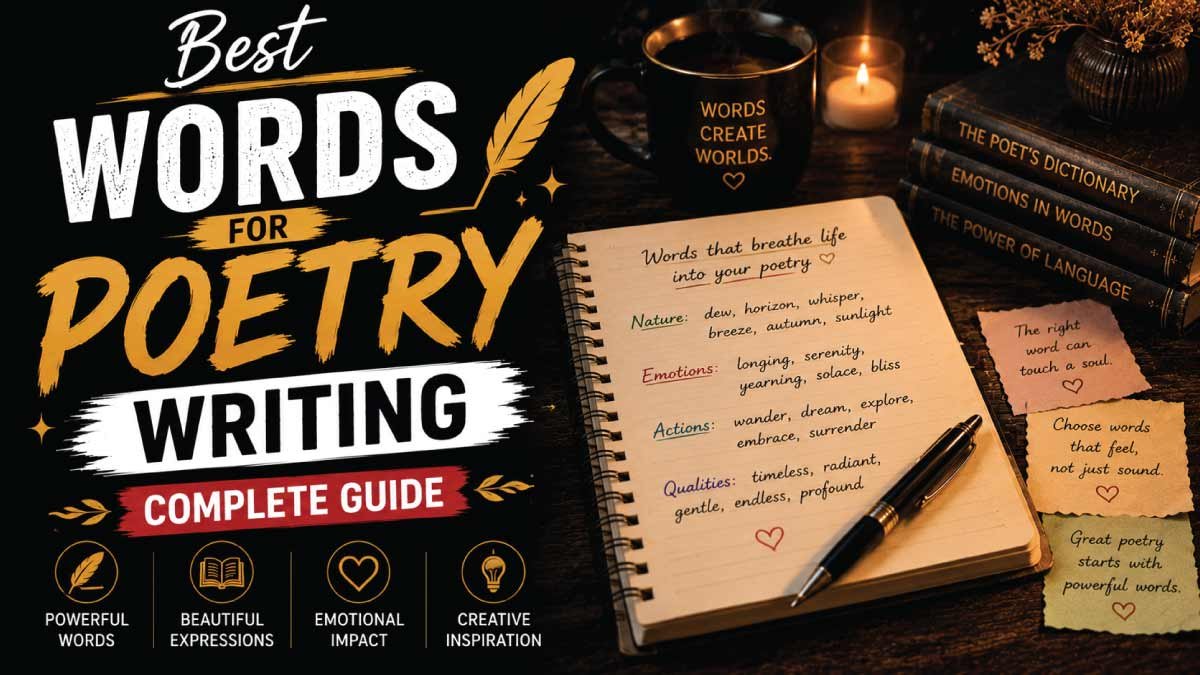
Choosing the right words is one of the most important parts of writing poetry. Strong poetry words can create emotions, vivid images, and deep meaning in just a few lines. Whether you are writing about love, sadness, hope, nature, or life struggles, powerful words can make your poem feel more emotional and memorable.
In this guide, you will discover some of the best words for poetry writing, grouped by emotions and themes to help beginners write beautiful poems more easily.
Emotional Words for Poetry
These words help express deep human feelings and make poetry more powerful, relatable, and emotionally rich. They are often used to describe inner struggles, healing, and emotional states that readers can connect with.
- Heartbroken
- Lonely
- Hopeful
- Fearless
- Forgotten
- Restless
- Peaceful
- Empty
- Fragile
- Endless
- Silent
- Broken
- Lost
- Gentle
- Melancholy
- Grateful
- Dreaming
- Wounded
- Burning
- Healing
Beautiful Nature Words for Poems
Nature-inspired words help create vivid imagery and peaceful emotional atmosphere in poetry. These words connect human emotions with natural elements, making poems feel more visual and expressive.
- Moonlight
- Sunset
- River
- Breeze
- Shadow
- Forest
- Rainfall
- Thunder
- Ocean
- Petals
- Sunrise
- Mist
- Clouds
- Stars
- Mountain
- Autumn
- Snowfall
- Blossom
- Lightning
- Horizon
Romantic Words for Love Poetry
Love poetry becomes more expressive and emotionally engaging when soft, intimate, and meaningful words are used. These words help describe affection, connection, and deep emotional bonds.
- Desire
- Passion
- Forever
- Whisper
- Heartbeat
- Embrace
- Darling
- Soulmate
- Tenderness
- Devotion
- Kiss
- Affection
- Adore
- Beloved
- Warmth
- Enchanted
- Dreamy
- Sweetness
- Flame
- Eternal
Sad Words for Emotional Poetry
Sad poetry often uses words that reflect pain, loss, and emotional heaviness. These words help create depth and allow readers to feel the intensity of sorrow and reflection.
- Tears
- Darkness
- Goodbye
- Hollow
- Silence
- Pain
- Sorrow
- Grief
- Fading
- Regret
- Heartache
- Despair
- Loneliness
- Misery
- Weeping
- Empty
- Shadowed
- Forgotten
- Brokenness
- Mourning
Powerful Words for Motivational Poems
Motivational poetry relies on strong, uplifting language that encourages action, hope, and inner strength. These words help create energy, confidence, and emotional drive in a poem.
- Courage
- Strength
- Rise
- Victory
- Brave
- Determined
- Hope
- Fearless
- Faith
- Inspire
- Warrior
- Journey
- Freedom
- Resilience
- Triumph
- Light
- Believe
- Growth
- Conquer
- Dream
Mysterious Words for Deep Poetry
Mysterious poetry uses words that create imagination, uncertainty, and emotional depth. These words help build atmosphere and make readers think beyond literal meaning.
- Eclipse
- Phantom
- Secret
- Echo
- Illusion
- Twilight
- Veil
- Abyss
- Mirage
- Silence
- Hollow
- Midnight
- Whisper
- Unknown
- Hidden
- Labyrinth
- Smoke
- Shadows
- Enigma
- Haunted
Soft and Calm Words for Peaceful Poetry
Peaceful poetry uses gentle, soothing language that creates a sense of relaxation, comfort, and emotional balance. These words help build calm imagery and soft moods.
- Serenity
- Quiet
- Calm
- Gentle
- Harmony
- Floating
- Bloom
- Morning
- Feather
- Grace
- Stillness
- Tranquil
- Softly
- Glow
- Pure
- Warm
- Drift
- Lullaby
- Comfort
- Silence
Strong Action Words for Poetry
Action words bring movement, energy, and life into poetry. They help readers feel the motion and emotion happening in each line, making the poem more dynamic and expressive.
- Shatter
- Dance
- Whisper
- Roar
- Rise
- Fall
- Wander
- Escape
- Drift
- Scream
- Shine
- Burn
- Tremble
- Soar
- Collapse
- Flow
- Climb
- Run
- Spin
- Breathe
Best Descriptive Words for Poetry Writing
Descriptive words help paint clear mental images for readers. They make scenes more vivid, emotional, and visually rich, allowing poetry to feel more immersive and real.
- Golden
- Frozen
- Crimson
- Endless
- Shimmering
- Dusty
- Velvet
- Glowing
- Ancient
- Fragile
- Wild
- Empty
- Silent
- Sparkling
- Darkened
- Gentle
- Stormy
- Lonely
- Fading
- Radiant
Words That Sound Beautiful in Poetry
Some words naturally feel musical and poetic because of their rhythm, softness, and emotional flow. These words are often used to enhance tone and create a lyrical quality in poetry.
- Luminous
- Velvet
- Eternity
- Solitude
- Symphony
- Celestial
- Blooming
- Harmony
- Infinite
- Moonbeam
- Daydream
- Glimmer
- Serenity
- Melody
- Paradise
- Twilight
- Radiance
- Whispering
- Starlight
- Evergreen
Also Read:
How to Choose Better Words for Poetry
Choosing the right words is one of the most important skills in poetry writing. Strong poetry is not about using fancy vocabulary, but about selecting words that clearly express emotion, mood, and meaning.
Use Sensory Language
Sensory language helps readers experience the poem through sight, sound, touch, smell, and imagination. It makes poetry feel alive and emotionally engaging.
Instead of saying:
“The garden looked nice.”
You can write:
“Golden petals danced beneath the warm sunset.”
This version creates a clear image and stronger emotional impact, allowing the reader to see the moment instead of just understanding it.
Avoid Overcomplicated Vocabulary
Many beginner poets believe that difficult or advanced words make poetry better. In reality, simple and honest language often feels more powerful and relatable.
Readers connect more deeply with natural expressions than with forced complexity. The goal is emotional clarity, not linguistic difficulty.
Simple words can carry strong emotions when used correctly.
Match Words With Mood
Every poem has a mood or emotional tone. Choosing words that match this mood helps create consistency and stronger emotional effect.
Sad Poem
Use words like:
- Hollow
- Darkness
- Silence
- Tears
Happy Poem
Use words like:
- Bloom
- Light
- Warmth
- Joy
Romantic Poem
Use words like:
- Whisper
- Embrace
- Heartbeat
- Forever
Matching words with emotion ensures the poem feels unified and meaningful.
Also Read:
Use Metaphors and Symbolism
Poetry becomes more powerful when words represent deeper meanings beyond their literal sense. Metaphors and symbolism help express emotions in creative and indirect ways.
Example
“The storm inside my chest”
Here, “storm” is not literal weather—it symbolizes emotional pain, inner conflict, or emotional intensity. This technique allows readers to interpret meaning personally and feel the emotion more deeply.
Choosing the right words is about clarity, emotion, and imagination working together. When words match feeling, poetry becomes more powerful, memorable, and meaningful.
Final Thoughts
The best words for poetry writing are the ones that create emotions, images, and meaning. Beautiful poetry does not depend on difficult vocabulary. It comes from honest feelings and carefully chosen words that connect with readers.
Whether you are writing about love, sadness, hope, nature, or dreams, using emotional and descriptive language can make your poetry stronger and more memorable.
As a beginner, focus on simple but meaningful words. Practice regularly, read more poetry, and experiment with different styles. Over time, you will discover your own poetic voice and favorite writing words.