
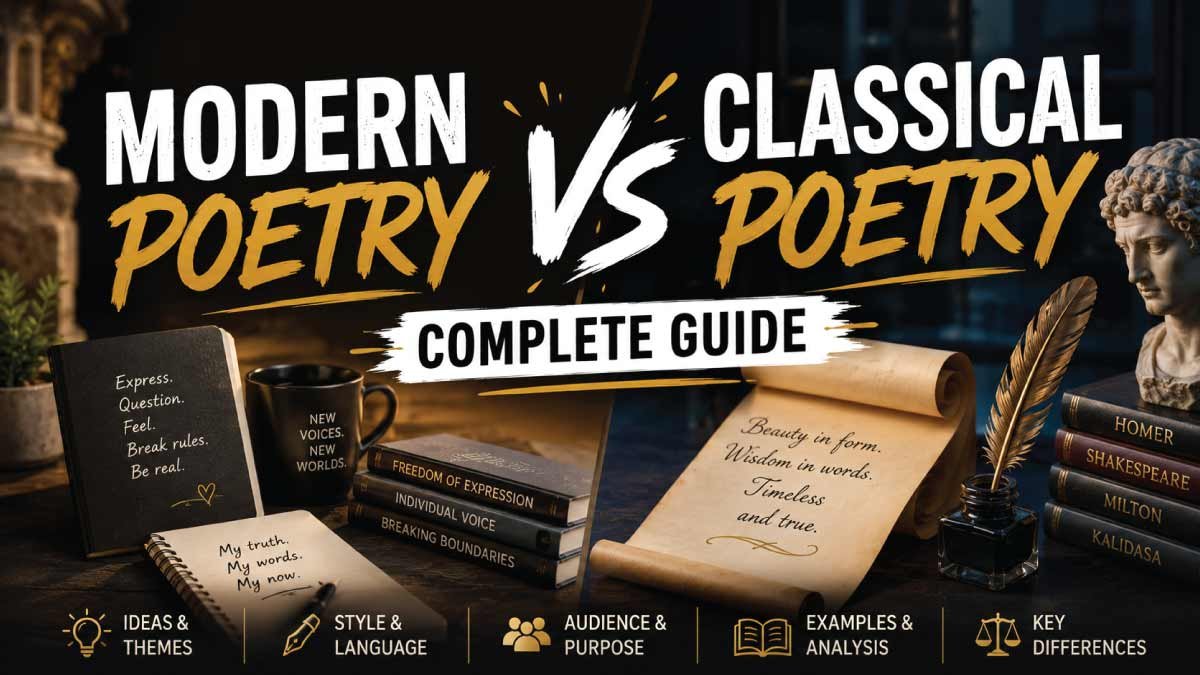
Poetry has changed greatly throughout history. Some poems follow strict traditional rules, while others allow complete creative freedom. These differences created two major styles of poetry known as modern poetry and classical poetry.
Classical poetry focuses on structure, rhythm, rhyme, and traditional forms, while modern poetry often breaks those rules to express thoughts and emotions more freely. Both styles are important in literature and continue to influence poets around the world.
Understanding the difference between modern poetry and classical poetry helps readers appreciate how poetry has evolved over time. In this guide, you will learn the main differences, characteristics, themes, writing styles, and famous poets connected to both forms of poetry.
What Is Classical Poetry?
Classical poetry refers to traditional forms of poetry that follow fixed structures, strict rules, and established literary patterns. It developed in earlier historical periods when poetry was considered a highly formal art form. Poets focused on rhythm, rhyme, and structured composition to create musical and elegant verses. This style often reflects cultural traditions and philosophical ideas of its time.
Classical poetry often focuses on:
- Nature
- Love
- Honor
- Religion
- Heroism
- Beauty
- Morality
The structure and musical quality of classical poetry are very important.
What Is Modern Poetry?
Modern poetry is a more flexible and expressive form of poetry that focuses on personal emotions, creativity, and freedom of style. Unlike classical poetry, modern poetry does not strictly follow traditional rules. Instead, it allows poets to experiment with form, language, and structure to express thoughts more naturally.
Modern poets often reject strict traditional rules. They experiment with:
- Free verse
- Irregular rhythm
- Everyday language
- Unusual structures
- Personal emotions
- Social issues
Modern poetry often feels more direct, emotional, and realistic.
Main Difference Between Modern and Classical Poetry
The main difference between modern and classical poetry lies in structure, language, and creative freedom. Classical poetry is more rule-based and formal, while modern poetry is more flexible and expressive. This difference reflects how poetry has evolved over time to match changing human experiences and communication styles.
Classical Poetry
- Follows rules
- Uses rhyme and meter
- Formal language
- Traditional themes
Modern Poetry
- Breaks traditional rules
- Often uses free verse
- Simple language
- Personal or modern themes
Structure in Classical Poetry
Classical poetry is known for its highly organized structure. Poets carefully follow established patterns to maintain rhythm, harmony, and musical flow. These structures were often used to enhance memorability and performance in oral traditions.
Common features include:
- Fixed stanza forms
- Rhyming patterns
- Meter and rhythm
- Balanced structure
Examples of classical forms:
- Sonnets
- Epic poetry
- Ballads
- Odes
Poets carefully followed poetic traditions.
Structure in Modern Poetry
Modern poetry offers more creative freedom in structure and form. Instead of following strict patterns, poets focus on emotional flow and meaning. This allows more experimentation with layout, spacing, and rhythm, making poetry feel more natural and personal.
Many modern poems:
- Do not rhyme
- Use uneven line lengths
- Have irregular rhythm
- Experiment with spacing
This freedom allows poets to express emotions naturally.
Language Differences
Language plays a key role in separating classical and modern poetry. While classical poetry often uses formal and elevated language, modern poetry tends to be more simple, direct, and conversational. This change reflects a shift toward emotional clarity and accessibility.
Classical Poetry Language
Classical poetry often uses:
- Formal vocabulary
- Elegant descriptions
- Complex wording
- Symbolic language
The tone may feel sophisticated or elevated.
Example Style
“Shall I compare thee to a summer’s day?”
This famous line from William Shakespeare Sonnets reflects classical poetic style.
Modern Poetry Language
Modern poetry uses more natural and everyday language to express emotions in a direct and relatable way. It focuses less on formal structure and more on personal experience and emotional honesty.
Modern poets usually use:
- Simple language
- Everyday speech
- Direct emotions
- Conversational tone
Example Style
“I carry my loneliness like an unfinished song.”
Modern poetry often feels personal and intimate.
Themes in Classical Poetry
Classical poetry focuses on universal and timeless themes that reflect cultural values, philosophy, and ideal human behavior. These poems often highlight beauty, morality, and larger-than-life ideas rather than personal struggles. The purpose was not only emotional expression but also teaching lessons and preserving traditions through structured language.
Classical poetry commonly explores timeless themes such as:
- Love
- Nature
- Heroism
- Religion
- Honor
- Beauty
- Fate
Many classical poems celebrate ideals and moral values.
Themes in Modern Poetry
Modern poetry focuses more on personal experience and real-life emotional struggles. Instead of idealized themes, it highlights everyday human issues and inner emotional states. This makes modern poetry more relatable to contemporary readers who connect with honesty and realism.
Modern poetry often explores:
- Mental health
- Identity
- Loneliness
- Society
- Relationships
- Anxiety
- Freedom
- Personal struggles
Modern poets frequently discuss realistic human experiences.
Rhythm and Rhyme
Rhythm and rhyme play a very different role in classical and modern poetry. Classical poetry follows strict patterns that create musical harmony, while modern poetry allows more freedom and natural flow. This difference reflects the shift from structured tradition to expressive creativity.
Classical Poetry
In classical poetry, rhythm and rhyme are essential elements that give the poem structure and musical quality. Poets carefully control sound patterns to maintain balance and beauty throughout the poem.
Classical poets carefully controlled:
- Meter
- Syllable counts
- Sound patterns
Common rhyme schemes include:
- ABAB
- AABB
- Shakespearean sonnet forms
The musical quality of poetry was highly valued.
Modern Poetry
Modern poetry often breaks away from strict rhythmic rules. Instead of focusing on structure, poets prioritize emotional expression and natural flow of language. This makes modern poetry feel more conversational and flexible.
Many modern poems use:
- Free verse
- Natural speech rhythm
- Irregular sounds
Modern poets care more about emotional flow than perfect rhyme.
Also Read:
Emotional Style
Emotion is expressed differently in classical and modern poetry. While classical poetry tends to be refined and symbolic, modern poetry is often more direct and emotionally raw. Both styles aim to communicate feelings, but they do so in different ways.
Classical Poetry Emotions
Classical poetry expresses emotions in a controlled, elegant, and often symbolic way. Even intense feelings like love or sadness are presented with refinement and artistic balance.
Modern Poetry Emotions
Modern poetry focuses on emotional honesty and personal experience. It often explores deeper psychological and emotional struggles in a direct and relatable way.
Modern poets openly discuss:
- Depression
- Fear
- Isolation
- Emotional pain
- Personal healing
This emotional honesty connects strongly with modern readers.
Imagery and Symbolism
Imagery and symbolism are important in both classical and modern poetry, but they are used differently to reflect different styles and themes.
Classical Poetry Imagery
Classical poets often rely on traditional and idealized imagery to represent beauty, philosophy, and spiritual ideas.
Classical poets often use:
- Mythology
- Nature imagery
- Religious symbols
- Idealized beauty
Modern Poetry Imagery
Modern poetry uses more personal, realistic, and everyday imagery. It reflects modern life experiences and psychological depth.
Modern poetry may use:
- Urban settings
- Daily life
- Personal memories
- Psychological imagery
The symbolism often feels more personal and realistic.
Famous Classical Poets
Classical poets are known for shaping the foundation of poetry through structured forms and timeless literary works. Their influence continues to inspire poets even today.
Some well-known classical poets include:
- William Shakespeare
- John Milton
- Homer
- William Wordsworth
Their works helped shape traditional poetry.
Famous Modern Poets
Modern poets have redefined poetry by making it more personal, emotional, and accessible to wider audiences. Their work often focuses on identity, emotions, and social issues.
Popular modern poets include:
- Maya Angelou
- Sylvia Plath
- Langston Hughes
- T. S. Eliot
These poets helped redefine poetry for modern audiences.
Classical Poetry Example
Classical poetry follows structured patterns, rhyme schemes, and a formal tone. It is often carefully crafted to maintain rhythm and musical flow, making it feel elegant and balanced. The language is usually refined, and every line is designed to fit a specific poetic structure.
Classical Style
The golden sun descends with grace,
While shadows drift through silent space.
Notice:
- Rhyming lines
- Formal tone
- Smooth rhythm
Also Read:
Modern Poetry Example
Modern poetry focuses more on personal expression and emotional truth rather than strict rules. It often uses free verse, simple language, and natural flow, making it feel more conversational and relatable.
Modern Style
The city lights blink outside my window
while sleep avoids me again tonight.
Notice:
- Free structure
- Conversational language
- Personal emotion
Which Style Is Easier for Beginners?
For many beginners, modern poetry feels easier to start with because it does not require strict rules or complex structures. It allows writers to express emotions freely without worrying about rhyme or meter. However, learning classical poetry can also strengthen a writer’s understanding of form and rhythm.
Many beginners find modern poetry easier because:
- It allows freedom
- It does not require strict rhyme
- It feels more natural
However, studying classical poetry helps writers understand:
- Rhythm
- Structure
- Literary techniques
Both styles improve poetic skills differently.
Similarities Between Modern and Classical Poetry
Even though classical and modern poetry are different in structure and style, they share many important artistic qualities. Both forms aim to express human emotions and connect with readers on a deeper level through creative language and imagery.
Both styles:
- Express emotions
- Use imagery
- Explore human experiences
- Create artistic language
- Connect with readers emotionally
The goal of poetry remains emotional and creative expression.
Why Modern Poetry Became Popular
Modern poetry became popular because writers wanted more freedom in expressing thoughts and emotions. Instead of following strict rules, poets began focusing on real-life experiences, personal identity, and social issues. This shift made poetry more relatable and accessible to everyday readers.
Poets began rejecting strict rules because they wanted poetry to reflect:
- Real emotions
- Modern life
- Individual experiences
- Social change
Free verse and experimental styles became more accepted.
Also Read:
Why Classical Poetry Still Matters
Classical poetry remains important because it preserves literary traditions and teaches foundational writing techniques. It also helps readers and writers understand how poetry evolved over time and appreciate the beauty of structured language and rhythm.
Classical poetry remains important because it teaches:
- Literary history
- Traditional techniques
- Rhythm and meter
- Cultural values
Many classical poems are still admired for their beauty and craftsmanship.
Can You Combine Both Styles?
Yes, many modern poets successfully combine elements of both classical and modern poetry. This allows them to create unique writing styles that blend structure with emotional freedom, making poetry more creative and expressive.
For example:
- Modern themes with rhyme
- Free verse with traditional imagery
- Emotional honesty with structured rhythm
Poetry continues evolving creatively.
Common Misunderstandings
“Modern Poetry Has No Rules”
Modern poetry may feel free, but it still requires creativity, emotional depth, and thoughtful structure. It is not random writing; it is intentional expression without strict traditional limits.
“Classical Poetry Is Outdated”
Classical poetry is not outdated. It continues to influence modern writing styles and remains an important part of literary education and cultural history.
“Rhyming Automatically Makes Poetry Better”
Rhyme alone does not make poetry strong. Emotional meaning, imagery, and originality are far more important than forced rhyming patterns.
Which Style Should You Read?
Both classical and modern poetry offer valuable experiences for readers and writers. The best choice depends on personal taste, emotional preference, and learning goals. Exploring both styles can improve understanding and appreciation of poetry as a whole.
Read Classical Poetry If You Enjoy:
- Musical language
- Traditional structure
- Historical literature
- Formal beauty
Read Modern Poetry If You Enjoy:
- Emotional honesty
- Simplicity
- Personal themes
- Creative freedom
Exploring both styles helps readers understand poetry more deeply.
Final Thoughts
Modern poetry and classical poetry represent two important approaches to creative expression. Classical poetry values structure, rhythm, tradition, and formal beauty, while modern poetry emphasizes freedom, emotional honesty, and experimentation.
Both styles have shaped literature in powerful ways and continue inspiring readers and writers worldwide. Understanding their differences helps readers appreciate how poetry evolves while still expressing timeless human emotions.
Whether you prefer the elegant rhythm of classical poetry or the raw emotional style of modern poetry, both forms offer meaningful ways to explore imagination, language, and life itself.