
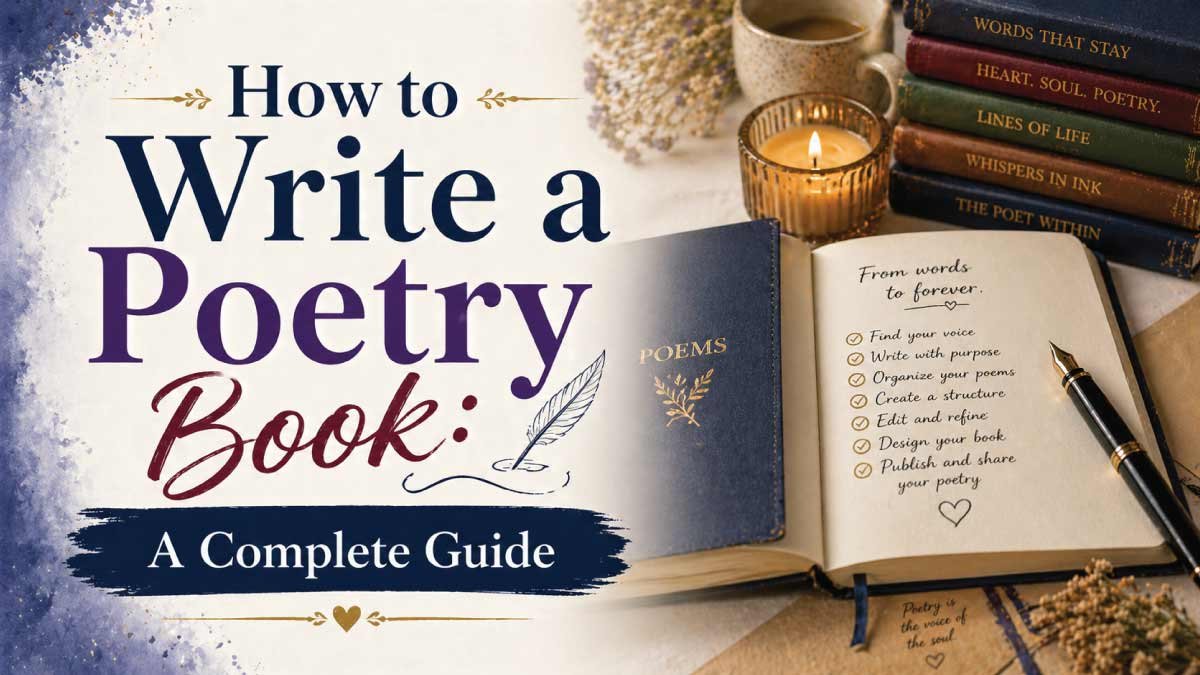
Writing a poetry book is a dream for many writers. Whether you are passionate about expressing emotions, sharing life experiences, or telling stories through verse, creating your own poetry collection can be deeply rewarding.
However, writing a poetry book is not just about putting random poems together. It requires planning, creativity, structure, and consistency.
If you are wondering how to write a poetry book, this complete guide will walk you through every step from your first idea to publishing your final manuscript.
What Is a Poetry Book?
A poetry book is a carefully arranged collection of poems brought together in one place. These poems are usually connected by a common theme, emotion, or writing style, which helps create a smooth reading experience. Instead of reading just one poem, the reader moves through a journey of different thoughts and feelings.
A poetry book is more than just a random set of poems. It is structured in a way that each poem adds meaning to the overall message of the book. This makes it feel complete, emotional, and purposeful.
It can include:
- Personal poems
- Story-based poems
- Themed poetry (love, sadness, life, nature)
- Experimental or modern poetry
A well-written poetry book feels like a connected experience rather than separate pieces of writing. Each poem supports the overall mood or idea, making the reader feel emotionally engaged from start to finish.
Why Write a Poetry Book?
Writing a poetry book is a meaningful journey for any writer who wants to share emotions, ideas, and creativity in a structured form. A poetry collection allows you to bring your individual poems together in one place, giving your work a stronger identity and a wider reach among readers.
1. Express Your Voice
A poetry book gives you the opportunity to fully express your personal voice. It allows you to share your thoughts, emotions, and life experiences in a deeper and more organized way. Through your collection, readers can understand your perspective and connect with your unique way of seeing the world.
2. Build Your Identity as a Writer
Publishing a poetry book helps you establish yourself as a serious writer or poet. It shows your dedication to your craft and builds credibility in the literary world. A published collection can also open doors to writing opportunities, recognition, and long-term growth as an author.
3. Connect with Readers
Poetry has a powerful emotional impact, and a book allows you to reach readers on a deeper level. When people read your collection, they can relate to your feelings, stories, and expressions. This emotional connection helps build a loyal audience that appreciates your writing style and message.
4. Create Passive Income
A well-published poetry book can also become a source of long-term income. Once published, it can continue to sell over time without constant effort. With proper marketing and distribution, your poetry collection can generate passive earnings while also sharing your creativity with a global audience.
Step-by-Step Guide on How to Write a Poetry Book
Writing a poetry book is a creative process that combines imagination, emotion, and structure. It is not only about writing poems but also about shaping them into a meaningful collection. By following simple steps, you can turn your ideas into a complete poetry book that feels organized, emotional, and engaging for readers.
1. Define Your Purpose and Theme
Before starting your poetry book, it is important to clearly understand why you are writing it. A strong theme gives direction to your work and keeps everything connected. It also helps readers understand the message you want to share, whether it is emotional, inspirational, or based on personal experiences and life lessons.
- What is my book about?
- What message do I want to share?
- Who is my target audience?
Popular themes include love, life struggles, mental health, nature, and motivation. A strong theme makes your poetry book more focused, powerful, and meaningful for readers.
2. Start Writing Poems Regularly
To build a poetry book, you need a collection of poems, and that only comes through regular writing. You don’t need to write perfectly in the beginning. The goal is to express your thoughts freely and build content over time. With consistency, your writing improves naturally and becomes more meaningful.
- Write daily or weekly
- Focus on your chosen theme
- Don’t aim for perfection initially
This stage is about creativity and practice. The more poems you write, the more options you will have to choose the best ones later for your book.
3. Experiment with Different Styles
Trying different writing styles helps make your poetry book more interesting and engaging. It allows you to explore creativity and avoid repetition in your writing. Each style brings a different feeling, which helps readers stay connected and enjoy variety while still following your main theme.
- Free verse
- Rhyming poems
- Short poems
- Long narrative poems
Experimenting with styles also helps you discover your natural writing voice. It makes your poetry book richer, more dynamic, and enjoyable for different types of readers.
4. Focus on Quality Over Quantity
When selecting poems for your book, quality is more important than how many poems you include. A strong poetry book is built on meaningful and emotional pieces rather than a large number of weak poems. Careful selection makes your book more powerful and professional.
- Select your strongest pieces
- Remove weak or repetitive ones
- Choose poems that match your theme
A smaller collection of well-written poems creates a stronger emotional impact and leaves a better impression on readers than a long, unfocused book.
5. Organize Your Poems Thoughtfully
Organizing your poems properly helps create a smooth reading experience. A well-structured poetry book feels like a journey where each poem connects to the next. This structure helps readers understand emotions in a gradual and meaningful way, making the book more engaging and impactful overall.
- By emotion (happy → sad → healing)
- By timeline (past → present → future)
- By theme sections
Example structure:
Section 1: Pain
Section 2: Reflection
Section 3: Growth
Good organization gives your book flow, clarity, and emotional depth.
6. Create a Strong Opening
The opening of your poetry book is very important because it creates the first impression. A strong opening poem should immediately attract the reader’s attention and introduce the emotional tone of your book. It sets expectations and encourages readers to continue exploring your collection with interest.
- Make it powerful and engaging
- Introduce the theme
- Capture the reader’s attention
A well-written opening creates curiosity and emotional connection, helping readers feel connected to your writing from the very beginning.
7. Write a Memorable Ending
The ending of your poetry book should leave a strong emotional impact on the reader. It should feel complete and meaningful, giving closure or reflection. A good ending makes the reader remember your book even after they finish reading it.
- Offer closure or hope
- Reflect your journey
- End with strong emotions
A powerful ending brings your poetry book to a meaningful conclusion and makes it more memorable and emotionally satisfying.
8. Edit and Refine Your Poems
Editing is a very important step that improves the quality of your poetry book. It helps you remove mistakes, improve clarity, and strengthen emotional expression. This process turns your raw poems into polished and professional writing that is easier and more enjoyable for readers.
- Grammar and spelling
- Word choice
- Flow and rhythm
- Clarity and meaning
Careful editing ensures that your poems are clear, powerful, and emotionally effective.
9. Add a Title to Your Poetry Book
Choosing the right title is important because it represents your entire poetry book. A good title attracts attention and gives readers an idea of what to expect. It should be simple, meaningful, and connected to the emotions or theme of your collection.
- Keep it simple and meaningful
- Reflect your theme
- Make it emotional or intriguing
Examples:
“Whispers of the Heart”
“Broken but Healing”
“Echoes of Silence”
A strong title makes your book more appealing and memorable.
10. Write a Book Description
A book description helps readers understand what your poetry book is about before they read it. It should clearly explain the theme, tone, and purpose of your collection. A good description creates interest and encourages readers to explore your book further.
- What the book is about
- Emotional tone
- Who it is for
Keep it short, clear, and engaging so readers can quickly connect with your work and understand its value.
11. Design Your Book Layout
The layout of your poetry book plays a big role in readability. A clean and well-structured design makes your poems easier to read and more visually appealing. Proper spacing and formatting improve the overall reading experience.
- Use proper spacing between lines
- Keep poems visually balanced
- Maintain consistent font and style
A neat layout makes your poetry book look professional and easier for readers to enjoy.
12. Create an Eye-Catching Cover
Your book cover is the first thing people see, so it should be attractive and meaningful. A good cover reflects the theme of your poetry book and grabs attention instantly. It helps create a strong first impression and encourages readers to explore your work.
- Match your theme
- Be simple but powerful
- Use readable fonts
A well-designed cover increases interest and helps your book stand out.
13. Choose How to Publish Your Poetry Book
Once your poetry book is complete, you need to decide how to publish it. There are different publishing options available, each with its own advantages. Your choice depends on your goals, experience, and control preferences.
Self-Publishing:
- Platforms like Amazon Kindle Direct Publishing (KDP)
- Full control over your book
- Higher profit margin
Traditional Publishing:
- Submit to publishers
- More credibility
- Less control
Both options can work depending on your needs and goals.
14. Promote Your Poetry Book
After publishing, promotion is very important to reach readers. Without promotion, even a good book may not get attention. Marketing helps you share your work with a wider audience and build your identity as a writer.
- Share poems on social media
- Create a website or blog
- Use SEO keywords
- Collaborate with other writers
- Run ads if possible
Good promotion increases visibility and helps your book succeed.
15. Keep Improving and Writing
Your first poetry book is only the beginning of your writing journey. Improvement comes with practice, learning, and consistency. Every new poem you write helps you grow as a writer and improves your creativity and expression over time.
- Learn from feedback
- Improve your writing skills
- Start new projects
Keep writing regularly, because continuous practice is the key to becoming a better poet.
Also Read:
Common Mistakes to Avoid
When writing a poetry book, many beginners make mistakes that reduce the overall quality and impact of their collection. Avoiding these errors helps you create a more professional, meaningful, and engaging book that readers can truly connect with.
1. No Clear Theme
A poetry book without a clear theme can feel confusing and disconnected. Readers may struggle to understand the purpose of the collection. Having a central idea or emotional direction helps your poems feel unified and gives your book a stronger identity and flow.
2. Weak Editing
Poor editing can make even good poems look unprofessional. Grammar issues, unclear lines, and weak structure reduce the overall quality of your work. Careful editing improves readability, strengthens expression, and ensures your poetry book feels polished and well-crafted.
3. Overloading the Book
Including too many poems can overwhelm readers and reduce the emotional impact of your collection. A well-curated selection is more powerful than a large number of average poems. Quality should always be prioritized over quantity to maintain reader interest.
4. Ignoring Structure
A poetry book without proper structure can feel disorganized and difficult to follow. Arranging poems in a thoughtful order helps create flow and emotional progression. Good structure makes your book feel professional and improves the reading experience.
5. Rushing the Process
Rushing to finish your poetry book often leads to incomplete or weak work. Poetry needs time for reflection, revision, and improvement. Taking your time allows you to refine your ideas and create a stronger, more meaningful collection.
Tips to Make Your Poetry Book Stand Out
Creating a standout poetry book requires creativity, honesty, and attention to detail. Small improvements in style and presentation can make a big difference in how readers respond to your work and how memorable your book becomes.
1. Be Authentic
Authenticity is one of the most important elements in poetry. Writing from real emotions and experiences makes your work more powerful and relatable. Readers can easily connect with honest expressions, which adds depth and meaning to your poetry book.
2. Use Strong Imagery
Strong imagery helps readers visualize your words and feel your emotions more deeply. By using descriptive language, you can create vivid mental pictures that make your poems more engaging, expressive, and memorable for your audience.
3. Keep It Simple
Simple language is often more effective in poetry than complex vocabulary. Clear and direct words allow your emotions to shine through without confusion. Simplicity makes your poetry more accessible and emotionally impactful for a wider audience.
4. Focus on Emotions
Emotion is the heart of poetry. A strong emotional connection makes your poems more meaningful and powerful. When readers feel what you feel, your writing becomes more impactful and leaves a lasting impression.
5. Stay Consistent
Consistency in tone, style, and theme gives your poetry book a professional and unified feel. It helps maintain flow between poems and ensures that your collection feels complete, balanced, and well-organized from start to finish.
Also Read:
How Long Should a Poetry Book Be?
There is no strict or universal rule for the length of a poetry book, as it depends on the writer’s style, theme, and purpose. However, most poetry books fall within a general range that feels complete and satisfying for readers without being too short or too overwhelming.
- 30–100 poems
- 80–150 pages
A shorter collection can still be powerful if the poems are strong and meaningful, while a longer book works well when the content is well-organized and engaging. In poetry, quality, emotional depth, and consistency always matter more than the total number of pages or poems.
Can Beginners Write a Poetry Book?
Yes, absolutely. Beginners can definitely write a poetry book, even without prior experience in professional writing. Poetry is not limited to experts—it is a form of self-expression that grows with practice and personal creativity. Anyone who is willing to express thoughts honestly can start this journey.
You don’t need to be an expert to write a poetry book. With practice, dedication, and creativity, anyone can do it.
Start small, stay consistent, and keep learning.
The key is to begin without fear of mistakes. Over time, your writing naturally improves as you continue to explore emotions and experiment with words.
Final Thoughts
Writing a poetry book is a deeply personal and rewarding experience that allows you to express emotions in a creative and meaningful way. It is not just about writing poems, but about creating a collection that reflects your thoughts, feelings, and perspective on life in a structured and impactful form.
By following the steps in this guide, choosing a theme, writing regularly, organizing your poems, and publishing strategically, you can create a poetry book that truly stands out. Each step helps shape your ideas into a complete and meaningful work.
Remember, perfection is not required. What matters most is honesty, creativity, and effort. Readers connect more with real emotions than with perfect words.
Also Read:
Conclusion
If you’ve been wondering how to write a poetry book, the process is simpler than it seems: start writing regularly, stay consistent with your practice, and keep refining your work over time. A poetry book is not created in a single day—it grows through patience, creativity, and continuous improvement of your poems.
Every poem you write brings you one step closer to completing your collection. Even small efforts matter because they gradually shape your style, strengthen your expression, and build your confidence as a writer. Over time, these individual poems come together to form a meaningful and complete body of work.
Your voice is unique, and your words have value. The emotions and experiences you share through poetry can deeply connect with others and leave a lasting impact.
So take the first step today. Keep writing, keep improving, and trust your creative journey. With dedication, you could soon hold your very own poetry book in your hands—a reflection of your thoughts, emotions, and imagination.
FAQs:
How to write a poetry book PDF
To write a poetry book PDF, first create and organize your poems in Word or Google Docs. Edit and format them properly with headings and spacing. Then export or download the file as a PDF. This format is widely used for sharing, printing, or self-publishing your poetry collection.
How to write a poetry book example
A poetry book example usually includes a theme, such as love or life, and a collection of related poems arranged in order. It starts with an introduction, followed by grouped poems, and ends with a strong emotional conclusion. Each poem supports the overall message of the book.
How to publish a poetry book for free
You can publish a poetry book for free using platforms like Amazon Kindle Direct Publishing (KDP) or other self-publishing websites. Simply upload your manuscript, design a cover, and publish digitally. There are no upfront costs, but marketing your book is important for visibility and sales.
How to write a poetry book proposal
A poetry book proposal includes your author bio, book summary, sample poems, target audience, and marketing plan. It should clearly explain your book’s theme and value. Publishers use it to evaluate your work. Keep it professional, concise, and focused on why your poetry book stands out.
How to create a poetry book in Canva
To create a poetry book in Canva, choose a book or document template. Add your poems, customize fonts, spacing, and images. You can design each page visually. Once complete, download it as a PDF for printing or digital sharing. Canva makes design easy for beginners.
How to write a poetry book and publish it
To write and publish a poetry book, first create a collection of poems around a theme. Edit and organize them, then design your book cover. Finally, upload it to self-publishing platforms like Amazon KDP or IngramSpark. Promote your book online to reach readers.
How much money can you make from a poetry book?
Earnings from a poetry book vary widely. Some poets earn a few dollars monthly, while successful ones make thousands. Income depends on pricing, marketing, audience size, and platform. Self-published books on Amazon usually earn royalties between 35% to 70% per sale.
What are the 5 rules of poetry?
The 5 basic rules of poetry are: express emotions clearly, use imagery, choose meaningful words, maintain flow or rhythm, and stay authentic. However, modern poetry is flexible, so these are guidelines rather than strict rules. Creativity and personal expression matter most in poetry writing.
Does poetry help with dyslexia?
Yes, poetry can help with dyslexia. It improves reading rhythm, word recognition, and memory through repetition and structured language. Short lines and rhythmic patterns make reading easier. Poetry also boosts confidence in language learning, helping individuals express thoughts creatively without pressure from long text.
How do I organize a poetry book?
Organize your poetry book by grouping poems based on emotion, theme, or story flow. You can arrange them from sadness to happiness or past to present. Good structure improves readability and creates a smooth emotional journey, making your book more engaging and professional.
Can beginners write a poetry book?
Yes, beginners can absolutely write a poetry book. You don’t need to be an expert writer. Start with simple poems, write regularly, and improve over time. With practice, creativity, and patience, anyone can create a meaningful poetry collection that expresses real emotions and ideas.