
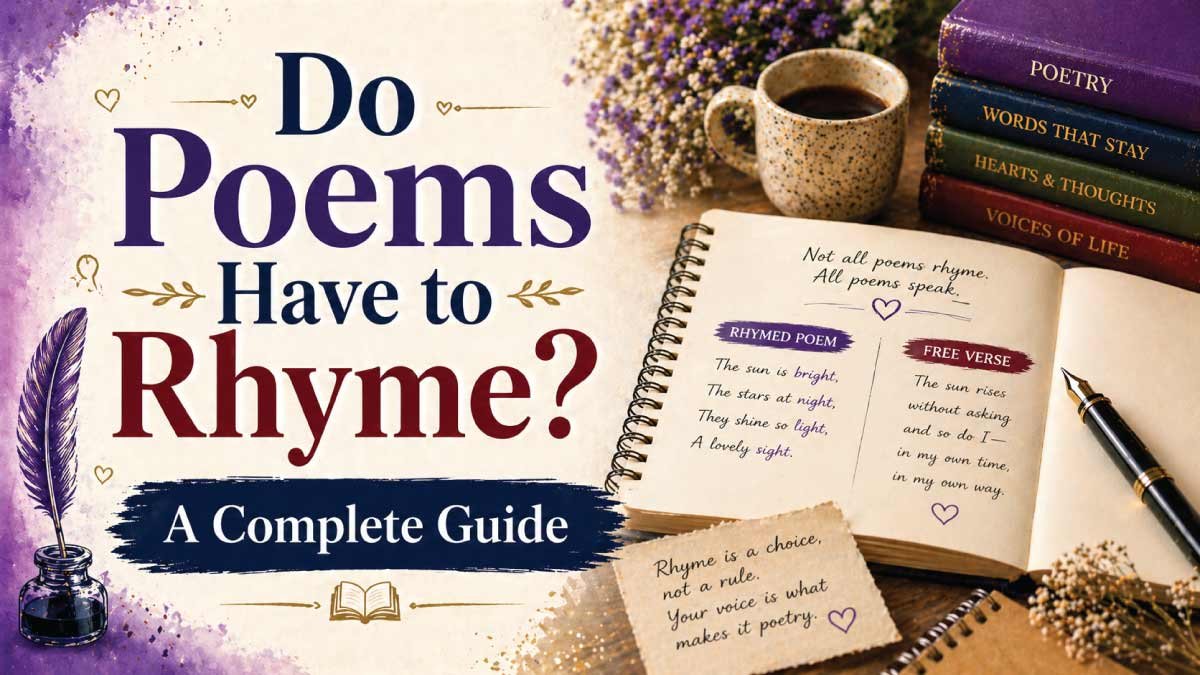
Poetry is often associated with rhyming words and musical sounds. Many people believe that for something to be considered a poem, it must rhyme. This idea usually comes from early exposure to nursery rhymes or classic poetry taught in schools.
But the truth is much broader and more interesting.
So, do poems have to rhyme? The simple answer is no. Poetry does not always need rhyme to be powerful, meaningful, or beautiful. In fact, many of the most famous modern poems do not follow any rhyme scheme at all.
In this complete guide, we will explore whether poems need to rhyme, the role of rhyme in poetry, and the different styles that poets use today.
What Is Rhyme in Poetry?
Rhyme is the repetition of similar or matching sounds, usually at the end of lines in a poem. It gives poetry a musical and rhythmic feel, making it more enjoyable to read and easier to remember. Rhymes help create flow and can make lines sound connected and balanced.
For example:
- Sky – High
- Light – Night
- Day – Play
Rhyming patterns are often described using letters like AABB or ABAB, which show how lines in a poem relate to each other based on their ending sounds. This structure helps poets organize their ideas and create a pleasing rhythm.
Rhyme has been an important part of poetry for centuries, especially in traditional forms. It adds beauty, sound, and structure to poems, making them more engaging and memorable for readers.
Why Do People Think Poems Must Rhyme?
Many people believe that poems must rhyme because of early learning experiences and traditional exposure to poetry. While rhyme is a common feature in many poems, it is not a strict requirement. Modern poetry includes many styles that focus more on expression than structure.
1. Nursery Rhymes and Early Education
From a young age, children are introduced to poetry through rhyming songs and simple verses. These poems are easy to remember and enjoyable to recite, which creates a strong association between poetry and rhyme. As a result, many people grow up thinking that rhyming is an essential part of all poems.
2. Traditional Poetry Forms
Many classic poetry forms, such as sonnets, limericks, and ballads, rely heavily on rhyme schemes. These structured forms are commonly taught in schools, which reinforces the idea that all poetry must follow similar patterns. This exposure makes rhyme seem like a universal rule rather than just one stylistic choice.
3. Musical Nature of Poetry
Rhyme naturally adds rhythm and flow to poetry, making it sound more musical and pleasing to the ear. This musical quality is one reason why rhyming poems are so memorable. Because of this, people often assume that rhyme is necessary to make a poem sound complete or enjoyable.
However, poetry has evolved far beyond these traditional expectations. Today, many poets use free verse and other non-rhyming styles to express thoughts and emotions more freely, proving that rhyme is optional, not essential.
When Do Poems Use Rhyme?
Although rhyme is not necessary in poetry, it is still widely used by poets to achieve certain effects. Rhyme can enhance the sound, structure, and emotional depth of a poem. Poets choose to use rhyme intentionally, depending on the style and message they want to convey.
1. Create Musical Rhythm
Rhyme adds a natural rhythm and musical quality to poetry. When words sound similar at the end of lines, it creates a smooth and pleasing flow. This musical effect makes poems more enjoyable to read aloud and helps maintain a consistent sound pattern.
2. Make Poems Memorable
Rhyming words make poems easier to remember. This is one reason why songs and traditional poems often use rhyme. The repeating sound patterns stay in the reader’s mind, helping them recall lines quickly and making the poem more engaging and impactful.
3. Add Structure
Rhyme schemes provide a clear pattern and organization to a poem. They guide the reader through the flow of lines and create a sense of order. Structured rhyming patterns can make a poem feel more complete and balanced.
4. Enhance Emotional Impact
Rhyme can emphasize important words and emotions in a poem. When certain sounds repeat, they draw attention to key ideas and feelings. This technique helps strengthen the emotional connection between the poem and the reader.
Types of Rhyming in Poetry
Rhyme is not limited to simple patterns at the end of lines. Poets use different types of rhyme creatively to add variety and depth. These variations show that rhyme is flexible and can be used in many artistic ways.
1. End Rhyme
End rhyme is the most common type of rhyme, where the last words of lines have similar sounds. It creates a clear and noticeable pattern, making the poem easy to follow and pleasant to read.
Example:
The sun is bright
It gives us light
2. Internal Rhyme
Internal rhyme occurs when rhyming words appear within the same line instead of at the end. This technique adds rhythm and musicality within a single line, making the poem sound more dynamic and engaging.
Example:
The light of night was shining bright
3. Slant Rhyme
Slant rhyme, also known as near rhyme, involves words that sound similar but are not exactly the same. It creates a softer and more subtle effect, giving poets more flexibility while still maintaining a sense of rhythm.
Example:
Shape – Keep
4. Eye Rhyme
Eye rhyme refers to words that look similar in spelling but sound different when spoken. This type of rhyme is more visual than auditory and is often used creatively to surprise or engage the reader.
Example:
Love – Move
Famous Non-Rhyming Poetry Styles
Many well-known poetry styles do not depend on rhyme at all. These forms focus more on rhythm, imagery, and expression rather than sound patterns, proving that rhyme is just one of many tools in poetry.
1. Free Verse
Free verse poetry does not follow a fixed rhyme scheme or structure. It gives writers complete freedom to express thoughts and emotions naturally. This style is widely used in modern poetry because of its flexibility and creative freedom.
2. Blank Verse
Blank verse does not use rhyme but follows a specific rhythmic pattern, usually iambic pentameter. This structure creates a smooth and natural flow, making it popular in classical and dramatic poetry.
3. Prose Poetry
Prose poetry is written in paragraph form instead of traditional line breaks, yet it still uses poetic language, imagery, and emotion. It blends the qualities of prose and poetry, offering a unique and expressive style without relying on rhyme.
These styles clearly show that rhyme is only one of many creative tools available to poets, not a strict rule that must always be followed.
Rhyming vs Non-Rhyming Poetry
Both rhyming and non-rhyming poetry have unique strengths, and neither is better than the other. The choice depends on your writing style and what you want your poem to achieve. Some poets prefer structure and sound, while others focus on freedom and expression without restrictions.
1. Rhyming Poetry
Rhyming poetry follows patterns where words sound similar, usually at the end of lines. This creates a musical effect that many readers enjoy. It is often used in songs, traditional poems, and playful writing where rhythm and sound play an important role.
Advantages:
- Musical and rhythmic
- Easy to remember
- Structured and organized
Limitations:
- Can feel restrictive
- Sometimes forces unnatural word choices
2. Non-Rhyming Poetry
Non-rhyming poetry, often written in free verse, focuses more on meaning and emotion rather than sound patterns. It allows writers to express thoughts naturally without worrying about matching words, making it a popular choice in modern poetry.
Advantages:
- Greater freedom
- More natural expression
- Focus on meaning and emotion
Limitations:
- Harder to create rhythm
- May feel less musical
Choosing between these styles depends on your purpose, message, and personal preference as a writer.
Also Read:
Does Rhyme Make a Poem Better?
Rhyme alone does not make a poem better. A poem’s quality depends on how well it communicates emotions and ideas. Even a perfectly rhymed poem can feel weak if it lacks depth, while a simple non-rhyming poem can be very powerful if it connects emotionally.
A good poem depends on:
- Strong imagery
- Clear emotions
- Meaningful ideas
- Creative expression
Sometimes, forcing rhyme can reduce the quality of your writing. It may lead to unnatural wording or weaken the message. That is why focusing on meaning and clarity is more important than following structure.
Quality always matters more than whether a poem rhymes or not.
When Should You Use Rhyme in Poetry?
Rhyme should be used only when it naturally fits your poem and enhances its meaning or flow. It is a tool, not a requirement, and should support your creativity rather than limit it.
Use rhyme if you want to:
- Write songs or lyrical poems
- Create playful or humorous content
- Follow traditional poetry forms
Avoid forcing rhyme if it:
- Changes your meaning
- Sounds unnatural
- Limits your creativity
The key is balance. When rhyme feels natural, it can improve your poem. When it feels forced, it is better to focus on clear expression and emotion instead.
Tips for Writing Poetry Without Rhyme
Writing poetry without rhyme may feel challenging at first, but it gives you more freedom to express your thoughts naturally. Instead of focusing on matching sounds, you can focus on meaning, emotion, and flow, which often creates a deeper and more modern poetic experience.
1. Use Strong Imagery
Strong imagery helps your readers clearly visualize what you are describing. Instead of telling, show your ideas through vivid descriptions, sensory details, and creative comparisons. This makes your poem more engaging and memorable, even without rhyme, because readers can “see” and feel your words.
2. Focus on Emotions
Emotion is the core of any powerful poem, especially in non-rhyming poetry. Write honestly about your feelings and experiences so readers can connect with your message. Real emotions make your poem relatable and meaningful, even if it does not follow a traditional rhyming pattern.
3. Create Natural Rhythm
Even without rhyme, your poem should have a natural flow. Use line breaks, pauses, and sentence structure to guide the reader’s pace. Reading your poem aloud can help you identify rhythm and improve smoothness, making your writing feel balanced and pleasant.
4. Choose Words Carefully
In poetry, every word matters. Without rhyme, word choice becomes even more important because each word carries meaning and emotion. Avoid unnecessary words and focus on clarity, depth, and impact to make your poem strong and effective.
5. Experiment Freely
Non-rhyming poetry gives you complete creative freedom. Try different styles, formats, and tones without worrying about strict rules. Experimentation helps you discover your voice and improve your confidence as a writer, allowing your creativity to grow naturally.
Also Read:
Common Myths About Poetry and Rhyme
Many people misunderstand poetry because of common myths about rhyme and structure. Clearing these misconceptions helps you write more freely and confidently, without limiting your creativity based on outdated ideas.
Myth 1: All Poems Must Rhyme
This is one of the most common myths about poetry. In reality, many poems do not rhyme at all. Free verse and modern poetry styles focus more on meaning and emotion, proving that rhyme is not a requirement for writing poetry.
Myth 2: Rhyming Poems Are Better
It is not true that rhyming poems are always better. The quality of a poem depends on its message, emotion, and creativity. A non-rhyming poem can be just as powerful, meaningful, and impactful as a perfectly rhymed one.
Myth 3: Non-Rhyming Poems Are Not Real Poetry
Some people believe that poetry without rhyme is not real poetry, but this is incorrect. Free verse is widely accepted and respected in modern literature. Many famous poets have written powerful poems without using rhyme at all.
Myth 4: Poetry Has Strict Rules
While traditional poetry forms have rules, modern poetry is much more flexible. Writers today have the freedom to experiment with style, structure, and language. This flexibility allows poets to focus on creativity and personal expression rather than strict guidelines.
Understanding these myths can remove confusion and help you write poetry with more confidence, creativity, and freedom.
How Poetry Has Changed Over Time
In the past, poetry followed strict rules of rhyme and rhythm. This was important for oral storytelling and memorization.
However, modern poetry has evolved to focus more on:
- Personal expression
- Unique voice
- Creative freedom
Today, poets are free to choose whether or not to use rhyme.
Also Read:
Why Non-Rhyming Poetry Is Popular Today
Non-rhyming poetry has gained strong popularity in modern times because it offers flexibility, authenticity, and creative freedom. Unlike traditional forms, it allows writers to focus more on meaning and emotion rather than strict patterns, making it more suitable for today’s diverse and expressive writing styles.
1. Freedom of Expression
Non-rhyming poetry gives writers complete freedom to express their thoughts without worrying about rhyme schemes or fixed structures. This flexibility allows ideas to flow naturally, helping poets explore complex emotions, personal experiences, and unique perspectives without any creative limitations.
2. Realistic Tone
One of the biggest reasons for its popularity is its natural and conversational tone. Non-rhyming poetry often sounds like everyday speech, making it easier for readers to understand and relate to. This realistic style helps create a stronger connection between the writer and the audience.
3. Emotional Depth
Without the need to fit words into a rhyming pattern, poets can focus more on exploring deep emotions. This allows for more honest and raw expression, making the poem feel more genuine and powerful. Readers often connect more with poems that reflect real and unfiltered feelings.
4. Modern Style
Non-rhyming poetry aligns well with modern themes and writing trends. Today’s poetry often addresses real-life issues, personal struggles, and contemporary ideas, which are better expressed without strict rules. This modern approach keeps poetry relevant and appealing to today’s readers.
This shift toward non-rhyming poetry shows how poetry continues to evolve over time, adapting to new voices, styles, and forms of expression while staying meaningful and impactful.
Final Thoughts: Do Poems Have to Rhyme?
So, do poems have to rhyme? The answer is simple and clear: no, they do not. Rhyme is only one technique among many in poetry. While it can add rhythm and musical quality, it is not necessary for creating a meaningful or powerful poem.
What truly matters is your intention, style, and creativity. Some poets prefer rhyming because it creates structure and flow, while others choose non-rhyming forms to express thoughts more freely. Both approaches are valid, and the choice depends entirely on what you want to achieve with your writing.
The most important thing is to express your thoughts honestly. When your emotions and ideas are real, your poem will naturally connect with readers, regardless of whether it rhymes or not.
Conclusion
Poetry is not about following strict rules—it is about expression, creativity, and emotional connection. Although rhyme has been an important part of traditional poetry, modern writing has proven that powerful and meaningful poems can exist without it.
If you are just starting, don’t limit yourself by thinking your poem must rhyme. Try different styles, explore new ideas, and allow yourself to experiment freely. This process will help you discover your unique voice and build confidence in your writing.
In the end, a great poem is not defined by rhyme. It is defined by how it makes the reader feel, the message it delivers, and the connection it creates.
FAQs:
Can you have a poem without rhyme?
Yes, a poem can exist without rhyme. Many modern poems use free verse, which does not follow a rhyming pattern. Instead, it focuses on emotion, rhythm, and expression. Non-rhyming poems can still be powerful, meaningful, and creative, as long as they clearly communicate feelings and ideas.
What are the 5 rules of poetry?
The five basic rules of poetry include expressing emotions clearly, using imagery, choosing meaningful words, maintaining rhythm or flow, and staying authentic. These are not strict rules but helpful guidelines. Poetry allows flexibility, so creativity and personal expression are more important than following fixed patterns or structures.
What are the five elements of poetry?
The five main elements of poetry are imagery, rhythm, sound, structure, and meaning. Imagery creates visual pictures, rhythm controls flow, sound includes rhyme or repetition, structure organizes lines, and meaning conveys the message. Together, these elements make poetry expressive, engaging, and emotionally powerful for readers.
What is cringe poetry?
Cringe poetry refers to poems that feel overly dramatic, forced, or unnatural. It often uses clichés, exaggerated emotions, or awkward expressions that do not feel genuine. While it may seem embarrassing to some readers, it can also be part of learning, as beginners improve their writing over time.
How do you say “I love you” in a poetic way?
You can say “I love you” poetically by using imagery and emotion. For example: “You are the calm in my chaos” or “My heart finds home in you.” Instead of direct words, poetic expressions use creative language to make feelings deeper, more beautiful, and emotionally meaningful.
What is a 5-7-5 poem called?
A 5-7-5 poem is called a haiku. It is a traditional Japanese form of poetry with three lines. The first line has 5 syllables, the second has 7, and the third has 5. Haiku usually focuses on nature, moments, or simple observations expressed beautifully.
What are the 7 steps to writing a poem?
The seven steps include choosing an idea, deciding a style, writing freely, using imagery, adding emotion, structuring lines, and editing the poem. These steps help beginners write clearly and creatively. Following them makes the process easier and helps turn simple thoughts into meaningful poetry.
What is the easiest type of poem to write?
Free verse is the easiest type of poem to write because it has no strict rules for rhyme or structure. Writers can express thoughts naturally without worrying about patterns. This makes it ideal for beginners who want to focus on emotions, creativity, and personal expression in poetry.