
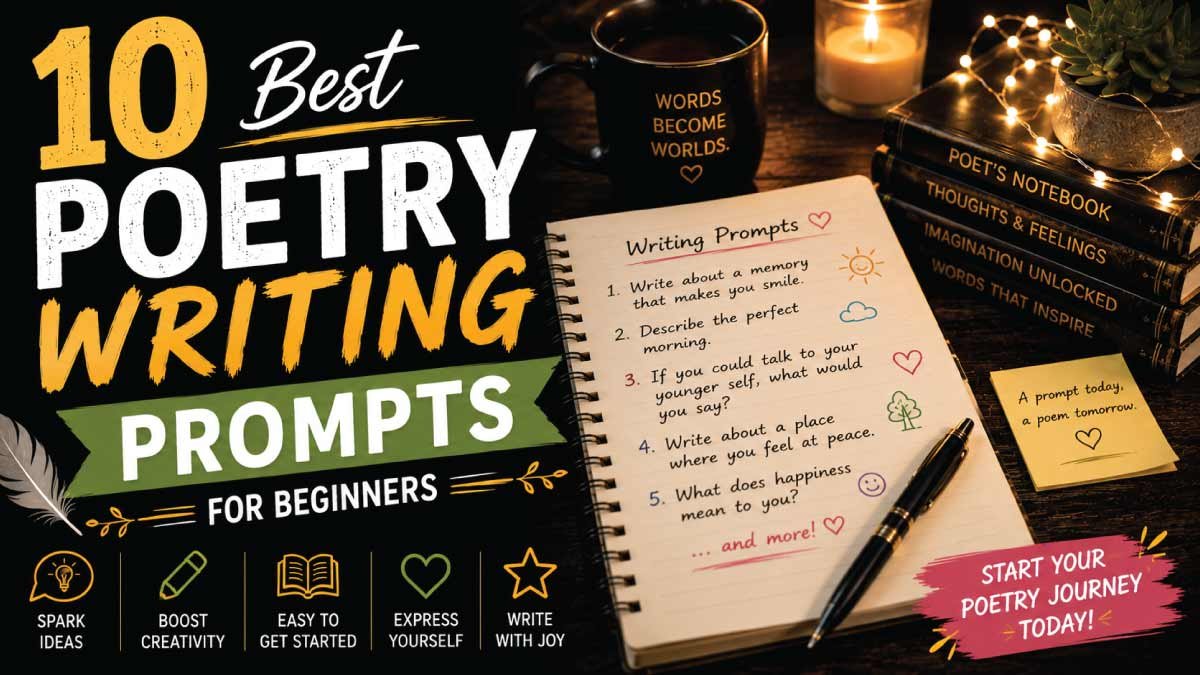
Writing poetry can feel exciting, emotional, and sometimes a little intimidating—especially for beginners. Many new writers struggle with finding ideas or knowing where to start. That is where poetry writing prompts become helpful. A good prompt gives your imagination direction and helps you turn simple thoughts into meaningful poems.
The best thing about poetry is that there are no strict limits. You do not need to be a professional writer to create something beautiful. Poetry allows you to express emotions, memories, dreams, fears, and everyday experiences in your own unique voice.
In this guide, you will discover 10 of the best poetry writing prompts for beginners. These prompts are simple, creative, and designed to help you build confidence while improving your poetry writing skills.
3. Write a Poem About Loneliness
Loneliness is one of the most powerful emotions in poetry because it is deeply personal and universally understood. It allows poets to explore silence, distance, and emotional emptiness in meaningful ways.
You can write about:
- Feeling left out
- Missing someone
- Silence at night
- Emotional distance
- Wanting connection
Try to focus on the mood, surroundings, and inner feelings rather than just stating “I am lonely.”
Example Prompt
Write about sitting alone in a quiet room while the world outside continues moving.
This prompt encourages emotional depth, reflection, and honest storytelling through imagery.
4. Write From the Perspective of an Object
This creative exercise helps you develop imagination by seeing the world from a completely different point of view. It teaches you how to think symbolically and creatively.
You could become:
- A broken clock
- An old book
- A candle
- A forgotten letter
- A tree in winter
Give the object emotions, memories, and a voice to express its story.
Example Prompt
Write a poem from the perspective of an old photograph.
This exercise builds creativity, empathy, and storytelling skills in poetry writing.
5. Write About Nature
Nature has always been a major inspiration for poets because it reflects beauty, change, and emotional depth. It also provides strong imagery for creative expression.
You can describe:
- Sunsets
- Mountains
- Rivers
- Flowers
- Seasons
- Birds
Focus on how nature connects with human emotions and inner experiences.
Example Prompt
Write a poem about the changing seasons and how they reflect human emotions.
Nature-based poetry helps improve visual description and symbolic thinking.
6. Write a Poem About Fear
Fear is a strong emotional theme that can create intense and meaningful poetry. It allows writers to explore vulnerability, uncertainty, and personal struggles.
Think about:
- Fear of failure
- Fear of losing someone
- Fear of growing older
- Fear of the future
- Childhood fears
Try to express fear through imagery rather than direct explanation.
Example Prompt
Describe fear as if it were a living creature following you.
This prompt encourages metaphor, symbolism, and emotional creativity.
7. Write About a Dream
Dreams are perfect for poetry because they are often mysterious, emotional, and imaginative. They allow complete creative freedom without strict rules.
You can write about:
- A strange dream
- A recurring dream
- A dream that felt real
- A dream future life
- A nightmare
Focus on emotions, visuals, and surreal details.
Example Prompt
Write about waking up from a dream you did not want to end.
Dream-based poetry helps you explore imagination, emotion, and symbolic storytelling in a natural way.
8. Write About Someone You Miss
Poetry often becomes most powerful when it expresses love, loss, and longing. Writing about someone you miss allows you to connect deeply with personal emotions and memories that still live in your heart.
Think about someone you miss:
- A friend
- A family member
- A childhood companion
- Someone far away
- Someone no longer alive
Focus on small memories, feelings, and moments rather than only stating sadness. Details like places, sounds, or shared experiences can make the poem more emotional and real.
Example Prompt
Write a poem about memories that return when you hear a certain song.
This prompt helps beginners connect emotions with memory-based storytelling and sensory imagery.
9. Write About Silence
Silence is a powerful theme in poetry because it can represent many different emotions. It can feel peaceful, heavy, emotional, or even uncomfortable depending on the situation.
Explore situations like:
- A silent room
- Silence after an argument
- Peaceful morning silence
- Silence between strangers
- Silence during heartbreak
Try to describe how silence feels rather than just stating its presence. What emotions does it carry? What thoughts appear inside it?
Example Prompt
Describe the loudest silence you have ever experienced.
This prompt encourages deeper emotional awareness and helps you explore mood and atmosphere in poetry.
Also Read:
10. Write About Hope During Difficult Times
Hope is one of the most inspiring and uplifting themes in poetry. It allows writers to express strength, healing, and emotional survival even in difficult situations.
You can write about:
- Surviving hard times
- Personal growth
- Healing
- Strength after pain
- Finding light in darkness
Focus on small signs of hope that appear even during emotional struggles.
Example Prompt
Write about a small light shining during a dark night.
This prompt helps beginners create emotional, motivational poetry with symbolic meaning.
Tips for Writing Better Poetry
Once you start using poetry prompts regularly, these tips can help you improve your writing style, emotional depth, and creativity over time.
Read More Poetry
Reading poetry written by experienced poets helps you understand how language, rhythm, and imagery work together.
You can explore poems by:
- Robert Frost
- Emily Dickinson
- William Wordsworth
- Maya Angelou
Different styles of poetry will help you discover your own voice and improve naturally.
Keep a Poetry Journal
Carry a notebook or use your phone to record ideas, emotions, and interesting lines whenever they appear. Many powerful poems begin from a single thought or sentence captured at the right moment.
Do Not Fear Imperfection
Many beginners stop writing because they expect perfection from the beginning. In reality, first drafts are meant to be imperfect.
Remember:
- Every poet starts somewhere
- First drafts are never final
- Improvement comes with practice
The goal is expression, not perfection.
Also Read:
Experiment With Different Styles
Trying different forms of poetry helps you discover what feels natural and enjoyable.
You can explore:
- Free verse
- Haiku
- Rhyming poetry
- Spoken word
- Narrative poetry
Experimentation builds confidence and creativity.
Use Real Emotions
Strong poetry comes from honest feelings. Readers connect more deeply with authenticity than with overly complex language.
Instead of trying to impress, focus on expressing what you truly feel.
Practice Imagery
Imagery makes poetry vivid, emotional, and memorable by showing instead of telling.
Instead of writing:
“I felt sad.”
You could write:
“The empty chair beside me felt colder than winter.”
This creates a stronger emotional connection and brings the poem to life.
Common Mistakes Beginner Poets Make
Understanding common mistakes in poetry writing can help you improve faster and develop a stronger, more natural writing style. Most beginners struggle not because they lack talent, but because they overthink or focus on the wrong things.
Trying Too Hard to Sound Deep
Many beginners believe poetry must sound complex or intellectual. As a result, they force difficult words or overly complicated sentences into their writing.
In reality, simple language often carries stronger emotional impact. Clear and honest expression helps readers connect more deeply with your poem.
Overusing Rhymes
Rhyming is optional in poetry, not a requirement. While rhymes can add rhythm and beauty, forcing them can make the poem sound unnatural.
If a rhyme does not fit the emotion or flow, it is better to avoid it and focus on meaning instead.
Ignoring Emotions
Poetry is not just about beautiful words—it is about emotional connection. If a poem does not make the reader feel something, it loses its impact.
Focus more on emotion, mood, and experience rather than just writing “pretty” lines.
Comparing Yourself to Famous Poets
Many beginners compare their writing to well-known poets and feel discouraged. However, every poet develops their voice over time through practice and experience.
Improvement takes patience, and every writer has a different creative journey.
Also Read:
How Poetry Improves Creativity
Writing poetry regularly strengthens both imagination and emotional awareness. It trains your mind to observe life more deeply and express thoughts creatively.
Poetry helps improve:
- Creative thinking
- Vocabulary
- Observation skills
- Emotional expression
- Storytelling ability
Many writers use poetry exercises as a way to improve their overall writing skills, not just poetry itself.
Turning Prompts Into Complete Poems
When using a writing prompt, you do not need to create a perfect poem immediately. The first step is simply to begin.
Start with:
- Random thoughts
- Small images
- Emotions
- Memories
- Simple descriptions
Over time, these small ideas naturally develop into complete and meaningful poems. The key is consistency and patience.
Best Time to Write Poetry
There is no fixed or perfect time to write poetry. However, many writers feel more creative during certain moments when their mind is calm and reflective.
Popular writing times include:
- Quiet mornings
- Late nights
- Rainy days
- Emotional moments
- Peaceful walks
The best time is whenever you feel mentally relaxed and creatively inspired.
Final Thoughts
Poetry writing prompts are one of the best ways for beginners to start writing confidently. They remove the pressure of finding ideas and help you focus on creativity, emotions, and self-expression.
The 10 prompts in this guide are designed to inspire imagination while helping you practice important poetry skills like imagery, rhythm, storytelling, and emotional depth.
Remember that poetry does not need to be perfect. The most meaningful poems often come from honest feelings and personal experiences. The more you write, the more natural poetry will become.
Pick one prompt today, start writing freely, and allow your thoughts to turn into poetry.