
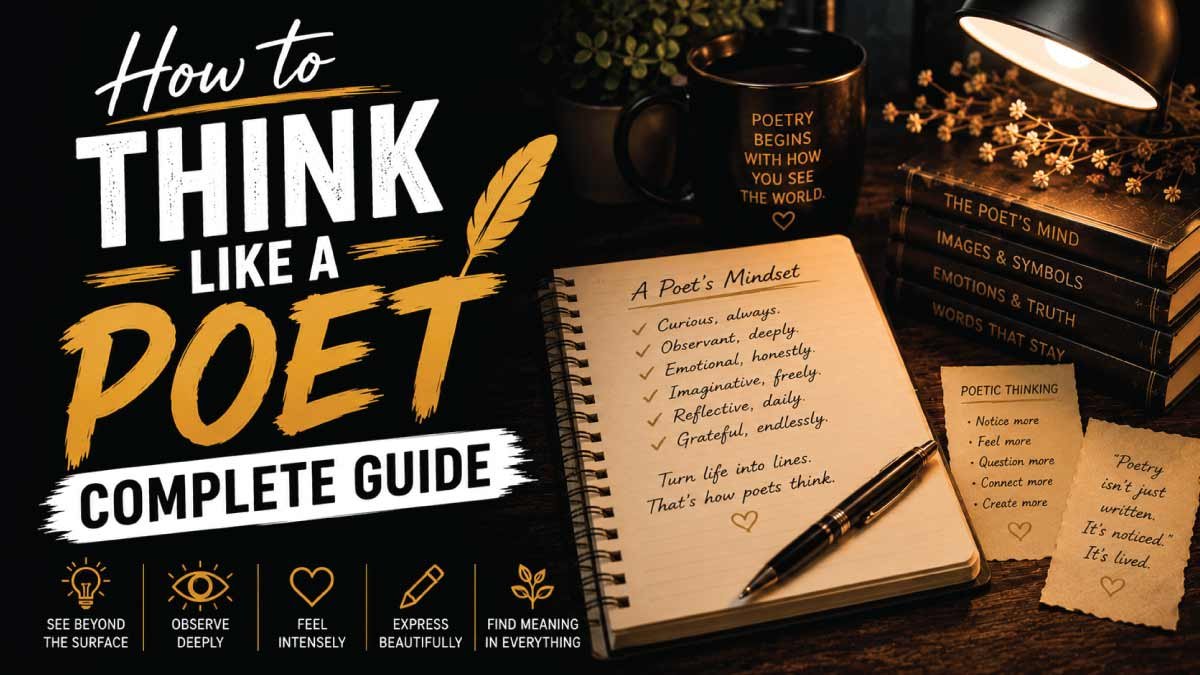
Poets see the world differently. They notice small details, hidden emotions, quiet moments, and meanings that many people overlook. Thinking like a poet does not mean you must be famous or write perfect poems. It simply means learning how to observe life deeply, feel emotions honestly, and express thoughts creatively.
Many beginners believe poetry is only about rhyming words, but true poetry begins in the mind. A poetic mindset helps writers turn ordinary experiences into meaningful art. A falling leaf, a silent room, or a simple conversation can become inspiration for a poem when viewed through a poet’s eyes.
In this guide, you will learn how to think like a poet, develop creative awareness, and train your mind to find poetry in everyday life.
What Does It Mean to Think Like a Poet?
Thinking like a poet means seeing the world with deeper awareness, emotional sensitivity, and imagination. Instead of only noticing what happens on the surface, a poet looks for meaning, emotion, and hidden beauty in everyday life. This way of thinking transforms ordinary experiences into creative and expressive ideas.
Poets often notice things others overlook. They pay attention to sound, silence, colors, memories, and emotions in ways that give deeper meaning to simple moments.
For example, while one person may simply see rain, a poet may notice:
- The sound on windows
- The smell of wet streets
- The loneliness of cloudy skies
- The comfort of staying indoors
Poetic thinking turns normal experiences into emotional and vivid expressions.
Start Observing the World Carefully
Observation is one of the most important skills in poetry. Strong poems often come from small details that others ignore in daily life. When you learn to observe carefully, even simple moments can become powerful writing material.
Great poetry often comes from noticing details others miss.
Pay Attention to Small Things
Poets find inspiration in ordinary scenes that most people pass by without thinking. These small details often carry emotional meaning when viewed through a creative lens.
Look closely at moments like:
- Birds sitting on power lines
- Sunlight entering a quiet room
- People waiting at bus stops
- Wind moving through tree branches
- Footsteps in empty streets
These small observations can inspire powerful poems.
Use All Your Senses
Poets do not just describe what they see—they use all five senses to create a full emotional experience for the reader. Sensory writing helps bring scenes to life and makes poetry more immersive.
Ask yourself:
- What do I see?
- What do I hear?
- What do I smell?
- What do I feel?
- What emotions appear?
Example
Instead of writing:
“The beach was beautiful.”
A poet may write:
“Cold waves kissed the silent shore beneath a fading orange sky.”
Sensory details make writing stronger and more emotional.
Feel Emotions Honestly
Poetry is deeply connected to human emotion. To think like a poet, you must allow yourself to experience feelings fully instead of ignoring or suppressing them. Honest emotions create the foundation of meaningful poetry.
Accept all emotions:
- Happiness
- Fear
- Love
- Loneliness
- Hope
- Grief
- Anxiety
- Dreams
Even painful emotions can become meaningful poetry when expressed honestly.
Reflect on Your Feelings
Thinking like a poet also means looking inward and understanding your emotional reactions to everyday experiences. Instead of just noticing what happened, poets try to understand why it affected them and what deeper emotions are involved.
Ask yourself questions like:
- Why did this moment affect me?
- What memory does this remind me of?
- What emotion am I avoiding?
- What feeling is hardest to describe?
Self-reflection helps poets create authentic writing that feels honest and relatable.
Learn to See Symbolism Everywhere
Poets often see deeper meanings in ordinary objects and situations. This symbolic thinking allows simple things to represent complex emotions or life experiences.
For example:
- Rain may symbolize sadness
- Sunrise may symbolize hope
- Winter may symbolize loneliness
- Flowers may symbolize growth
Thinking symbolically adds emotional depth to poetry and allows readers to interpret multiple meanings in a single poem.
Practice Metaphorical Thinking
Metaphors help poets express emotions in creative and imaginative ways instead of stating them directly. This makes poetry more engaging and emotionally powerful.
Instead of saying:
I felt nervous.
A poet may write:
My thoughts trembled like leaves in a storm.
Metaphors make poems more vivid, expressive, and memorable by connecting emotions to visual images.
Also Read:
Spend Time Alone With Your Thoughts
Quiet moments often help creativity grow because they allow emotions and ideas to surface naturally without distraction. Many poets find inspiration in solitude and silence.
Many poets enjoy:
- Walking alone
- Sitting in nature
- Listening to music
- Watching people quietly
- Writing in silence
These moments create space for deeper thinking and emotional clarity, which often leads to stronger poetry.
Keep a Notebook of Ideas
Poetic inspiration can appear at any time, so it is important to capture ideas before they are forgotten. Even small observations or random thoughts can later become meaningful poems.
Write down:
- Interesting phrases
- Emotional moments
- Dreams
- Random thoughts
- Beautiful descriptions
- Conversations you hear
Many famous poets carried notebooks everywhere because even a single line can grow into a powerful poem later.
Read More Poetry
Reading poetry is one of the best ways to train your mind to think like a poet. When you read different poets and styles, you naturally start understanding how emotions, imagery, and meaning are built inside a poem.
You begin noticing:
- Imagery
- Rhythm
- Emotional expression
- Symbolism
- Unique perspectives
You can explore poems by:
- Robert Frost
- Emily Dickinson
- Maya Angelou
- William Wordsworth
Reading different styles helps expand your imagination and improves your own writing naturally.
Think Beyond Literal Meanings
Poets rarely stop at surface-level meaning. Instead, they look for deeper emotional or symbolic interpretations behind ordinary situations. This habit transforms simple experiences into meaningful poetry.
For example:
A train journey may represent:
- Life changes
- Growing older
- Leaving the past behind
A closed door may symbolize:
- Fear
- Lost opportunities
- Emotional distance
Thinking deeply about ordinary things creates richer and more powerful poetry.
Slow Down and Notice Life
Modern life moves quickly, but poetry grows from slowing down and paying attention. When you slow your thoughts, you begin to notice details and emotions that usually go unseen.
Poets notice moments that others rush past.
Try:
- Watching sunsets carefully
- Listening to rain without distractions
- Observing people’s expressions
- Walking without headphones
- Sitting quietly outdoors
Creative awareness grows when you become fully present in the moment.
Ask “What If?” Questions
Imagination plays a key role in poetic thinking. Asking “what if” questions helps you explore ideas beyond reality and create unique poetic concepts.
Ask creative questions like:
- What if the moon could speak?
- What if memories had colors?
- What if sadness lived inside a house?
- What if dreams could escape into reality?
These questions help develop original poetic ideas and expand creative thinking.
Write Without Fear of Judgment
Many beginners hesitate to write freely because they worry about sounding strange, emotional, or imperfect. However, poetry grows best in honesty and openness, not in fear.
Poetry requires honesty and vulnerability.
Not every poem needs to be perfect. The real goal is expression, not perfection. Allow yourself to write freely, explore emotions, and create without self-criticism.
Learn to Appreciate Silence
Silence is an essential part of poetic thinking. It is often in quiet moments that deeper thoughts, emotions, and reflections appear. When distractions fade, the mind becomes more sensitive to feelings that are usually ignored in daily life.
Poets understand that silence can feel:
- Peaceful
- Lonely
- Heavy
- Healing
- Mysterious
Listening to silence can inspire meaningful writing because it allows space for emotion to surface naturally.
Use Imagination Daily
Poetic thinking becomes stronger when imagination is practiced regularly. Imagination helps you move beyond reality and explore creative possibilities that can turn simple ideas into meaningful poetry.
You can practice by imagining:
- Stories behind strangers
- Emotions hidden in old buildings
- Conversations between stars and oceans
- Feelings carried by the wind
Creative imagination helps transform ordinary life into poetry.
Also Read:
Find Beauty in Imperfection
Poets often find meaning in things that are broken, faded, or imperfect. Instead of seeing flaws as negative, they see them as signs of history, emotion, and life experience.
For example:
- Cracked walls
- Old photographs
- Empty streets
- Wilted flowers
- Faded letters
Imperfection often carries emotional meaning that makes poetry more relatable and real.
Notice Human Emotions Around You
Poets pay close attention to human behavior and emotional expression in everyday life. Observing people helps you understand feelings that are often unspoken but deeply present.
Watch how people:
- Smile nervously
- Hide sadness
- Speak softly when emotional
- Sit quietly when tired
- Avoid eye contact when hurt
Human behavior provides endless poetic inspiration because emotions are always present, even when not expressed directly.
Turn Everyday Moments Into Poetry
One of the most important skills in poetic thinking is transforming ordinary experiences into meaningful, emotional writing. A poet does not just describe events—they reshape them with imagery and feeling.
Ordinary Thought
It was raining outside.
Poetic Thought
The sky wept softly against the window all night.
Poetic thinking adds emotion, depth, and imagery to everyday experiences, turning simple moments into expressive art.
Do Not Force Creativity
One of the most important lessons in poetry is learning not to force ideas or emotions. When writers try too hard to sound poetic, the writing often becomes artificial and loses emotional truth. Creativity flows best when it is natural, not pressured.
Natural writing usually feels more emotional and authentic.
Simple words can be powerful when the emotions behind them are real and honest. Instead of forcing complexity, focus on clarity and feeling.
Common Habits of Poets
Many poets naturally develop certain habits that help strengthen their creativity over time. These habits are not rules, but they often shape how poets see the world and express their thoughts.
Many poets naturally develop habits such as:
- Daydreaming often
- Reflecting deeply
- Observing people quietly
- Writing random ideas
- Enjoying solitude
- Thinking emotionally
- Appreciating art and music
These habits help strengthen creativity and make poetic thinking more natural.
Also Read:
Common Mistakes Beginners Make
Beginners often struggle because they misunderstand what makes poetry effective. Avoiding common mistakes can help improve both emotional depth and clarity in writing.
Trying to Sound Complicated
Poetry does not need difficult or fancy words. In fact, overly complex language can reduce emotional connection.
Simple emotional language often works best.
Copying Other Poets Too Much
Learning from other poets is helpful, but copying their style too closely can weaken your own voice. Originality is important for emotional authenticity.
Your own voice matters most.
Ignoring Personal Experiences
Real experiences often create the strongest and most meaningful poems. Writing from personal emotion adds depth and honesty.
Focusing Only on Rhymes
While rhyme can enhance poetry, it is not the most important element. Poetry is more about emotion, imagery, and meaning than perfect rhyming patterns.
How Poetic Thinking Improves Creativity
Thinking like a poet develops more than just writing skills. It improves how you observe, feel, and understand the world around you. This mindset can enhance creativity in many areas of life.
It helps with:
- Writing
- Storytelling
- Emotional intelligence
- Observation
- Imagination
- Communication
Poetic thinking also helps people understand emotions more deeply, making their expression more meaningful and powerful.
Final Thoughts
Learning how to think like a poet is about changing the way you observe and experience life. Poets notice hidden beauty, emotional depth, and meaningful details in ordinary moments. They use imagination, symbolism, and honest feelings to transform everyday experiences into art.
You do not need to be born a poet to develop poetic thinking. By observing carefully, reflecting deeply, reading poetry, and writing regularly, anyone can train their mind to think more creatively and emotionally.
The world is already full of poetry. Thinking like a poet simply means learning how to see it.