
Poetry is one of the oldest and most powerful forms of human expression. Long before books, newspapers, or the internet existed, people used poems to tell stories, express emotions, preserve history, and share wisdom. But if someone asks, “What is a poem?” the answer is more than just a simple definition.
A poem is not just written words arranged in lines, it is language shaped with feeling, rhythm, and meaning. In this blog post, we will explore what a poem is, how it works, its types, structure, purpose, and why poetry still matters in today’s world.
Understand the Meaning of a Poem
A poem is a creative form of writing that uses carefully selected words, rhythm, and sometimes rhyme to express deep emotions, thoughts, or stories in a meaningful and artistic way. It often communicates feelings and ideas in a more imaginative and expressive form than normal writing.
A poem is a piece of writing that uses carefully chosen words, rhythm, and sometimes rhyme to express emotions, ideas, or stories in a creative way.
Unlike regular writing, poetry does not always follow strict grammar or sentence rules. Instead, it focuses on:
Emotions
Imagery
Sound and rhythm
Deep meaning
A poem may be short or long, simple or complex, but its main purpose is to create an emotional or imaginative experience for the reader.
What Makes a Poem Different from Normal Writing?
Poetry is a special form of writing that goes beyond simple explanation. Unlike essays or stories that mainly focus on informing or narrating events, poetry focuses on emotions, imagination, and deeper meaning. It uses creative language, rhythm, and symbolism to express feelings in a more artistic and impactful way.
1. Expression Over Explanation
Normal writing usually explains ideas in a clear and direct way so the reader fully understands the message. Poetry, however, is more focused on expressing emotions and personal experiences. Instead of giving straight information, it shows feelings through creative language, allowing readers to interpret meaning in their own emotional and imaginative way.
2. Rhythm and Flow
One major difference in poetry is its rhythm and flow, which makes it sound musical when read aloud. This rhythm is created through rhyme, repetition, syllable patterns, or line breaks. Even when poems do not rhyme, they still maintain a natural flow that gives them a unique sound and emotional effect compared to normal writing.
3. Compact Language
Poetry often says a lot with very few words. Instead of long explanations, poets carefully choose powerful and meaningful words that carry deep emotion or meaning. This makes poetry more intense and impactful, as every word matters. Readers are encouraged to think deeply and interpret hidden meanings behind the short lines.
4. Imagination and Symbolism
Poems frequently use imagination, symbols, metaphors, and imagery instead of direct statements. This allows writers to express complex emotions in a creative way. For example, sadness might be shown through dark skies or fading light. Such symbolic language helps readers visualize feelings and connect emotionally rather than just understanding facts.
Main Elements of a Poem
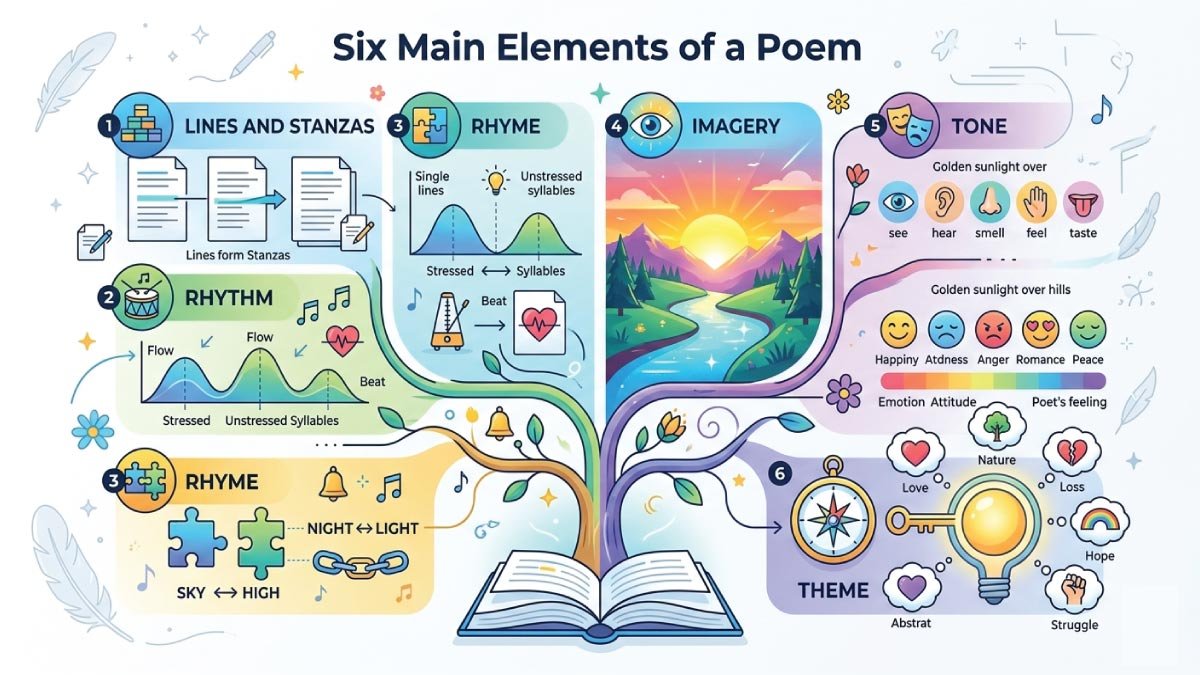
A poem is built from several important elements that work together to create meaning, emotion, and beauty. These elements are the foundation of poetry and help readers understand how a poem is structured and what message it is trying to deliver in a creative and artistic way.
1. Lines and Stanzas
Poetry is written in lines instead of paragraphs. A single line can carry meaning on its own, but when multiple lines are grouped together, they form a stanza. Stanzas work like paragraphs in prose writing. They help organize ideas, separate thoughts, and give structure to the poem, making it easier to read and understand.
2. Rhythm
Rhythm refers to the natural beat, flow, and movement of words in a poem. It is what gives poetry a musical quality when read aloud. Rhythm can be created through stressed syllables, repetition, or sentence patterns. It makes the poem more engaging and helps express emotions in a smoother and more artistic way.
3. Rhyme
Rhyme happens when words have similar ending sounds, creating a pleasing effect in poetry. Common examples include “night” and “light” or “sky” and “high.” While many traditional poems use rhyme to create harmony, modern poetry may not always follow this rule. Still, rhyme remains a popular tool for adding beauty and flow.
4. Imagery
Imagery is the use of descriptive language to create mental pictures in the reader’s mind. It helps readers see, hear, feel, or imagine the scene being described. For example, a line like “Golden sunlight spilled over the sleeping hills” allows the reader to visualize a peaceful and beautiful natural scene vividly.
5. Tone
Tone refers to the emotional attitude or mood of the poem. It shows how the poet feels about the subject. A poem can have a happy, sad, romantic, angry, or peaceful tone. Tone helps shape the reader’s emotional response and adds depth to the meaning behind the words.
6. Theme
The theme is the central idea or message of the poem. It is what the poem is truly about at its core. Common themes include love, nature, loss, hope, and life struggles. The theme helps connect all elements of the poem and gives it a deeper meaning beyond just the written words.
Types of Poems
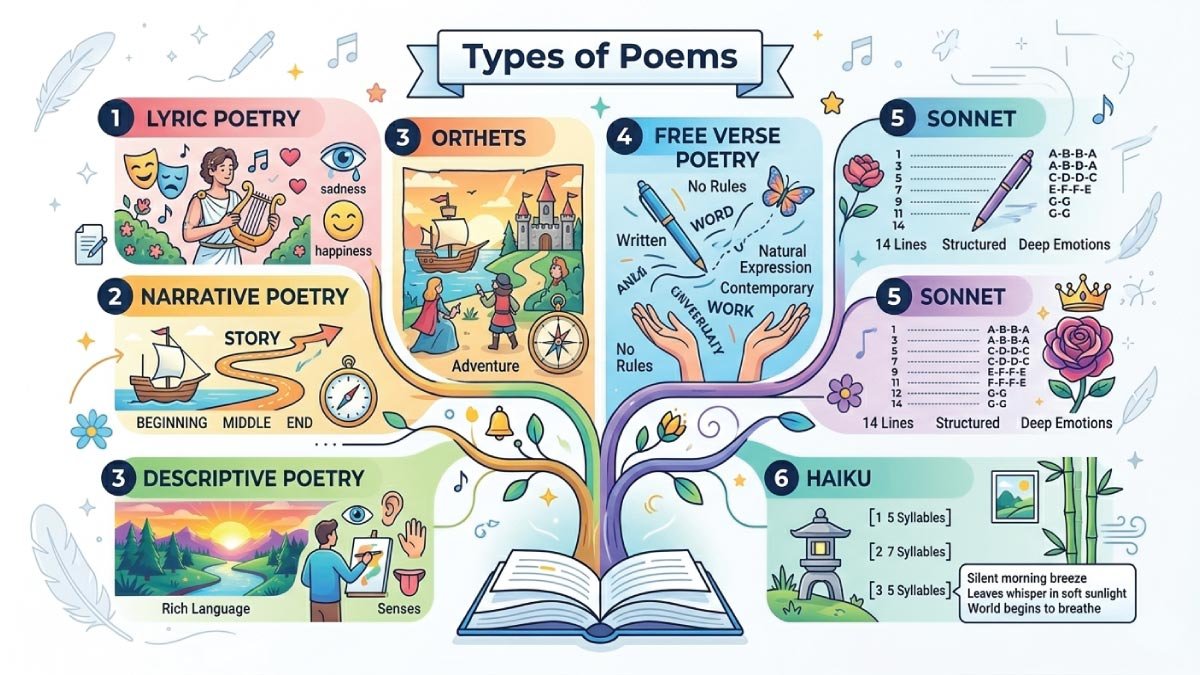
Poetry exists in many different forms, and each type has its own style, structure, and purpose. Some poems focus on emotions, while others tell stories or describe scenes. Understanding these types helps readers appreciate how diverse and creative poetry can be in expressing thoughts and ideas.
1. Lyric Poetry
Lyric poetry focuses on personal emotions, thoughts, and feelings. It is usually short, expressive, and musical in nature. Instead of telling a story, it captures a moment or emotion from the poet’s heart. Common themes include love, sadness, happiness, longing, and inner reflection, making it deeply emotional and relatable for readers.
2. Narrative Poetry
Narrative poetry tells a complete story through verse. It includes characters, a clear plot, and events that unfold from beginning to end. These poems are similar to short stories but are written in a poetic form. They often include adventure, history, or moral lessons, making them both entertaining and meaningful to read.
3. Descriptive Poetry
Descriptive poetry focuses on painting a detailed picture of a person, place, object, or experience. The poet uses rich and vivid language to help readers imagine the scene clearly. These poems often appeal to the senses, allowing readers to see, hear, and feel what is being described in a beautiful and artistic way.
4. Free Verse Poetry
Free verse poetry does not follow any strict rules of rhyme, rhythm, or structure. It gives poets complete freedom to express thoughts naturally. This modern form of poetry allows flexibility in writing style and flow, making it more conversational and creative. It is widely used in contemporary poetry for emotional expression.
5. Sonnet
A sonnet is a traditional poem consisting of 14 lines with a specific rhyme scheme. It is often used to express deep emotions, especially love, admiration, or philosophical thoughts. Sonnets are structured and elegant, requiring careful word choice and rhythm. Famous poets have used sonnets to create timeless and powerful literary works.
6. Haiku
A haiku is a short Japanese form of poetry made up of three lines. It usually follows a 5-7-5 syllable pattern and focuses on nature, seasons, or simple moments in life. Despite its short length, a haiku captures deep meaning and emotion in a very peaceful and minimalistic way.
Example:
Silent morning breeze
Leaves whisper in soft sunlight
World begins to breathe
Purpose of a Poem
Poetry is not just artistic writing—it plays an important role in human life. It helps people express emotions, share experiences, and understand the world in a deeper way. Through creativity and imagination, poetry connects feelings with words in a meaningful and powerful form.
1. Expressing Emotions
One of the main purposes of poetry is to express emotions that are difficult to say directly. People often use poems to share feelings like love, sadness, pain, joy, or confusion. Poetry gives a safe and creative space to release emotions and turn inner thoughts into meaningful words.
2. Sharing Experiences
Poetry is also a way to share personal or social experiences with others. Poets write about their life journeys, struggles, and observations of society. This helps readers connect with different perspectives and understand emotions or situations they may not have experienced themselves.
3. Inspiring Readers
Many poems are written to inspire and motivate people. They encourage strength during hard times and promote hope, courage, and positivity. Inspirational poetry can change a person’s mindset, helping them stay strong and believe in themselves even when life becomes challenging or uncertain.
4. Preserving Culture
Throughout history, poetry has been used to preserve traditions, stories, and cultural values. It keeps language and heritage alive by passing knowledge from one generation to another. Many ancient societies used poetry as a way to record history and share important beliefs and customs.
5. Entertainment
Poetry is also a source of enjoyment and entertainment. Its rhythm, rhyme, and creative expression make it pleasant to read or listen to. Whether simple or complex, poems can entertain readers while also making them think deeply, creating both joy and reflection at the same time.
How a Poem Creates Emotion
One of the most powerful qualities of poetry is its ability to awaken deep emotions in the reader. A poem does not just inform or describe, it makes the reader feel something, often in a very personal and memorable way.
One of the most powerful aspects of poetry is its ability to create emotion.
A poem does this through:
- Strong imagery
- Emotional language
- Rhythm and sound
- Symbolism
- Personal connection
For example, a poem about rain might not just describe weather. It may represent sadness, renewal, or memories. The same simple image can carry many hidden meanings depending on how it is written and interpreted.
This is why readers often feel deeply connected to poetry—it speaks directly to the heart, not just the mind.
Why Poetry Is Important in Modern Life
Even in today’s fast-moving digital world, where people are surrounded by technology and constant information, poetry still holds strong value. It continues to help people express emotions, understand life better, and connect with themselves and others in a meaningful way.
1. Mental and Emotional Healing
Poetry plays an important role in mental and emotional well-being. Many people read or write poems to cope with stress, sadness, loneliness, or anxiety. It allows them to express feelings that are difficult to say directly, helping them release emotional pressure and find comfort, peace, and inner healing through words.
2. Creative Expression
Poetry gives individuals a powerful and free way to express their thoughts and imagination. Unlike strict forms of writing, it allows creativity without limitations. People can use metaphors, imagery, and unique language styles to share their inner world. This creative freedom makes poetry a valuable tool for personal expression.
3. Communication Skills
Writing poetry helps improve language and communication skills. It strengthens vocabulary, sentence structure, and the ability to express ideas clearly and effectively. As poets carefully choose words to create impact, they naturally become better writers and communicators. This skill also benefits academic writing, storytelling, and everyday communication.
4. Cultural Value
Poetry connects us to our culture, history, and literature. It preserves traditions, beliefs, and stories that are passed down through generations. Many cultures use poetry to reflect their identity and values. By reading poetry, people can better understand their roots and appreciate the richness of human cultural heritage.
5. Social Awareness
Poets often use their writing to highlight important social issues such as inequality, injustice, poverty, or environmental problems. Through emotional and powerful language, poetry raises awareness and encourages people to think deeply about society. It inspires change by making readers more conscious of the world around them and its challenges.
Famous Example of Poetry
To understand poetry in a clearer and more practical way, it is helpful to look at a simple example. Poetry often uses everyday language but arranges it in a creative and emotional way that makes it more meaningful and expressive for the reader.
To understand poetry better, here is a simple example of an original short poem:
- The morning breaks with gentle light,
- Chasing shadows of the night.
- Hope awakens, soft and new,
- Painting skies in golden hue.
This poem uses rhyme, imagery, and emotion to create a peaceful feeling. The words are simple, but the way they are arranged helps create a calm and hopeful atmosphere. It shows how poetry can turn a normal moment into something beautiful and meaningful.
How to Identify a Poem
Identifying a poem is not always difficult if you know what to look for. Poems usually have a special structure and style that separates them from regular writing or paragraphs. They often focus more on feelings and creativity than straightforward information.
If you are unsure whether a piece of writing is a poem, look for these signs:
- Written in lines instead of paragraphs
- Uses emotional or imaginative language
- May or may not rhyme
- Focuses on feelings or ideas rather than just facts
- Often includes rhythm or sound patterns
Conclusion
So, what is a poem? A poem is a creative form of writing that uses rhythm, emotion, and imagination to express ideas and feelings in a powerful way. It is not just words on a page—it is a reflection of human experience.
Poetry allows us to feel, think, and connect with life on a deeper level. Whether it is about love, sadness, nature, or hope, every poem carries a message that speaks to the heart.
In a world full of information, poetry reminds us of something simple yet powerful: words can touch the soul.
FAQs:
What is a simple definition of a poem?
A poem is a form of writing that uses creative and expressive language to share emotions, ideas, or stories. It often includes rhythm, imagery, and sometimes rhyme, making it different from normal writing by focusing more on feelings and imagination than direct explanation.
How do I explain a poem?
You can explain a poem by describing its main idea, emotions, and message in simple words. Focus on what the poet is trying to say, the mood, and the images used. Break it into lines or stanzas to understand its deeper meaning easily.
How do you write a poem?
To write a poem, start with a feeling, idea, or experience. Use simple but expressive words, add imagery, and decide if you want rhyme or free verse. Focus on emotions rather than rules, and let your creativity guide the structure and flow naturally.
What is the best meaning of poem?
The best meaning of a poem is that it is a creative form of expression that turns thoughts and emotions into artistic language. It uses rhythm, imagery, and symbolism to communicate deeper feelings that regular writing may not fully express.