
Publishing poetry online has become one of the easiest and most powerful ways for writers to share their voice with the world. Unlike traditional publishing, where you may wait months or even years for approval, online platforms allow you to publish instantly, build an audience, and even earn money from your work.
Whether you are a beginner poet or someone who has been writing for years, this guide will walk you through everything you need to know about how to publish your poem online in a smart, SEO-friendly, and audience-growing way.
Why Publishing Your Poem Online Matters Today
In today’s digital world, publishing poetry online has become one of the most powerful ways for poets to share their voice. It allows writers to reach a wider audience instantly, build recognition, and connect with readers globally without depending on traditional publishing channels or waiting for approvals.
In the digital era, poetry is no longer limited to books or magazines. Millions of readers now consume poetry on blogs, social media, and writing platforms every day. This shift has completely changed how poetry is shared and appreciated around the world.
Here are some key reasons why online publishing is important:
- Instant global exposure
- No need for traditional publishers
- Easy audience building
- Opportunity to go viral
- Possibility of earning income
- Creative freedom without restrictions
Platforms like WordPress, Medium, and Wattpad have completely transformed the way poets publish their work. They remove technical barriers and financial limitations, allowing anyone to start sharing poetry within minutes. This makes it easier for beginners and professionals alike to grow their audience and showcase creativity freely.
Step 1: Prepare Your Poem for Online Publishing

Before publishing your poem online, spend some time polishing it carefully. A strong first impression matters because online readers decide quickly whether to continue reading. Editing before publishing helps your poem feel more thoughtful, professional, and emotionally effective for your audience.
Check Grammar and Flow
Poetry allows creativity, but clarity still matters. Even free verse should read naturally and smoothly. Read your poem aloud several times because hearing the rhythm can help you notice awkward phrases, missing words, or places where the emotional flow feels interrupted.
- Spelling mistakes
- Repeated words
- Weak rhythm or flow
Improve Emotional Impact
A poem becomes memorable when it creates feeling. After finishing your draft, look beyond the words and think about the emotional response. Ask whether the poem truly communicates what you intended and whether a reader can understand and connect with the feeling.
Ask yourself:
- Does this poem connect emotionally?
- Is the message clear?
- Will readers feel something after reading it?
Format Properly
Good formatting makes online poems easier to read and more enjoyable. Most people read on phones, tablets, or small screens, so visual presentation matters. Clear spacing helps readers pause naturally, absorb emotion, and follow the rhythm without feeling overwhelmed.
Online readers prefer clean formatting:
- Short lines
- Proper spacing
- Stanza separation
- Easy readability on mobile screens
A well-formatted poem performs better in search engines and social sharing.
Step 2: Choose the Right Platform to Publish Your Poem
Choosing the right platform can shape how many people discover your work. Some platforms give you full control, while others provide an existing audience. Your choice should depend on whether you want visibility, long-term ownership, community feedback, or future monetization.
1. Blogging Platforms
If you want long-term control over your poetry, a blog is often the strongest option. It allows you to build your own space, create your identity as a poet, and grow a library of poems that readers can return to over time.
WordPress is the most popular choice because:
- You own your content
- You can customize design
- You can rank on Google
- You can monetize with ads
2. Writing Communities
Writing communities are especially helpful for beginners who want readers quickly. Instead of building an audience from zero, you can publish where readers already spend time. These platforms make sharing easy and help new poets gain confidence and early exposure.
Platforms like Medium are great for beginners:
- Built-in audience
- Simple publishing tools
- Opportunity to get discovered
- Clean reading experience
3. Poetry Apps
Poetry apps can be useful if you enjoy interaction and reader feedback. They are often more social than traditional blogs. Readers can respond directly to your work, which can help you understand what resonates emotionally and what keeps people engaged.
Wattpad is ideal for storytelling poets:
- Large creative community
- Readers can comment and follow
- Good for engagement and feedback
- Mobile-friendly publishing
Each platform has different benefits, so choose based on your goals.
Step 3: Create an Attractive Title for Your Poem
Your title is often the first thing readers notice before they read a single line. A strong title creates curiosity, sets emotional tone, and encourages clicks. It also helps search engines understand your poem, which can improve online visibility.
Good Title Examples:
- “A Broken Heart Still Beats in Silence”
- “When Hope Walks Through the Rain”
- “The Untold Story of Forgotten Dreams”
SEO Tip
A good poetry title should feel natural, emotional, and easy to remember. Think about words people may search online when looking for poems. Combining emotional language with clear meaning can help your poem attract both readers and search traffic.
Try including emotional or searchable words like:
- love
- life
- sadness
- hope
- journey
A strong title improves visibility on search engines and increases engagement.
Also Read:
Step 4: Write a Short Description (Meta Description)
Before publishing your poem, write a short description that tells readers and search engines what the poem is about. This small piece of text often appears in search results, so it should be clear, emotional, and inviting enough to encourage people to click.
A good description should:
- Be 150–160 characters
- Clearly explain the poem theme
- Include emotional keywords
Example:
“An emotional poem about lost love, silent pain, and hope that never dies even in the darkest moments of life.”
This helps search engines understand your content better.
Step 5: Format Your Poem for Online Readers
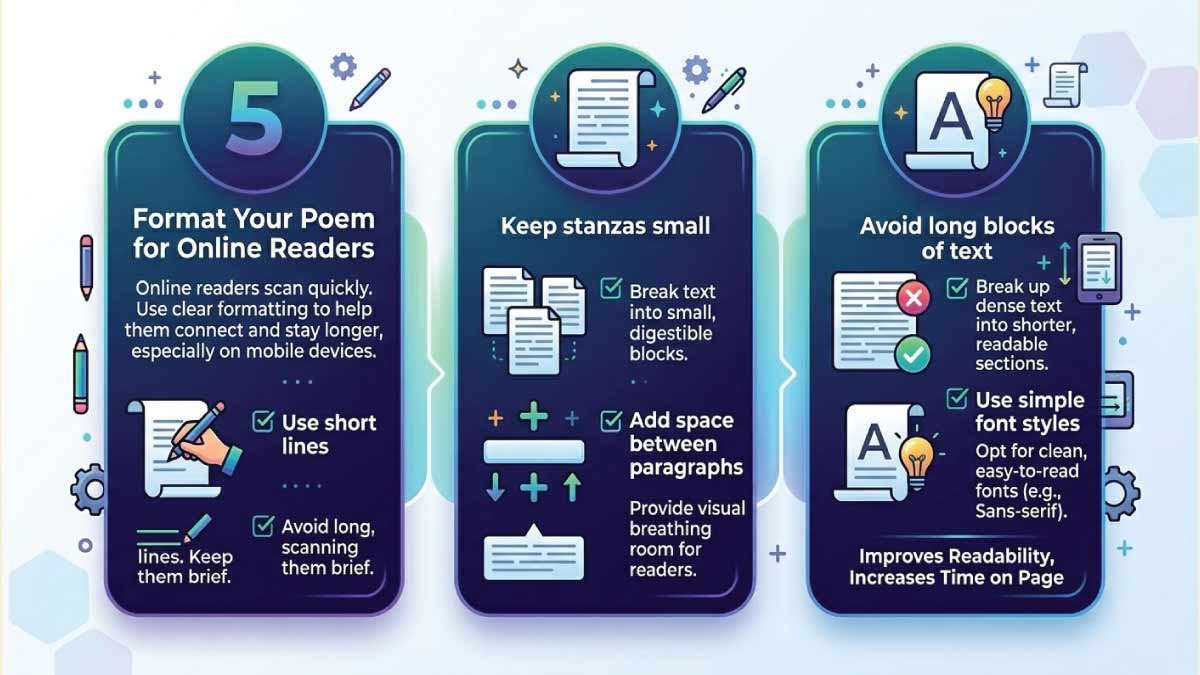
People read differently online than they do in books. Most visitors scan quickly before deciding whether to continue. Clear formatting makes your poem easier to absorb, especially on mobile devices, and helps readers stay longer and connect with your words.
Best formatting practices:
- Use short lines
- Keep stanzas small
- Add space between paragraphs
- Avoid long blocks of text
- Use simple font styles
This improves readability and increases time spent on your page.
Step 6: Publish Your Poem on Your Selected Platform
After editing and formatting, the next step is publishing your poem. This is where your writing becomes available to readers. The process is usually simple, and once you publish a few poems, it becomes faster and more comfortable each time.
On WordPress
WordPress is a strong option if you want ownership and long-term growth. It gives you full control over your content, categories, and design. It also helps if you want your poetry to rank in search engines and attract organic readers.
- Create a new post
- Add your title
- Paste your poem
- Add categories like “Poetry” or “Emotional Poetry”
- Click publish
On Medium
Medium is useful for writers who want a simple publishing experience. You can focus entirely on writing without worrying about technical setup. Its built-in audience also creates opportunities for discovery and engagement from new readers.
- Sign in to your account
- Click “Write”
- Add title and poem
- Format properly
- Publish instantly
On Wattpad
Wattpad works well for poets who enjoy community interaction. Readers can follow your profile, comment on your poems, and return for future posts. It can be especially helpful for storytelling poetry and building loyal readers.
- Open the app
- Tap “Create”
- Add your poem title
- Paste your poem
- Publish to your profile
Each platform has a slightly different interface, but the process is simple.
Also Read:
Step 7: Optimize Your Poem for SEO
If you want people to discover your poem through search engines, SEO matters. Good optimization helps search engines understand your content and improves your chances of ranking for relevant searches. Small SEO steps can bring long-term traffic to your poetry.
Use Keywords Naturally
Use words that readers may type when searching for poems online. Add them naturally in your title, description, headings, or introduction. Avoid forcing keywords because natural language feels better for both readers and search engines.
Include keywords like:
- poem about love
- emotional poetry
- sad poem
- short poem online
Add Internal Linking (for blogs)
If you publish on your own blog, connect your poem with related articles or other poems. Internal linking helps readers explore more content and strengthens the SEO value of your site by improving structure and page relationships.
Link your poem to other related posts to improve SEO strength.
Use Headings Properly
Headings make your content easier to scan and understand. They also help search engines identify the main structure of your page. A clean structure improves readability while making your poem page more organized and search-friendly.
Search engines understand structured content better.
Step 8: Share Your Poem on Social Media
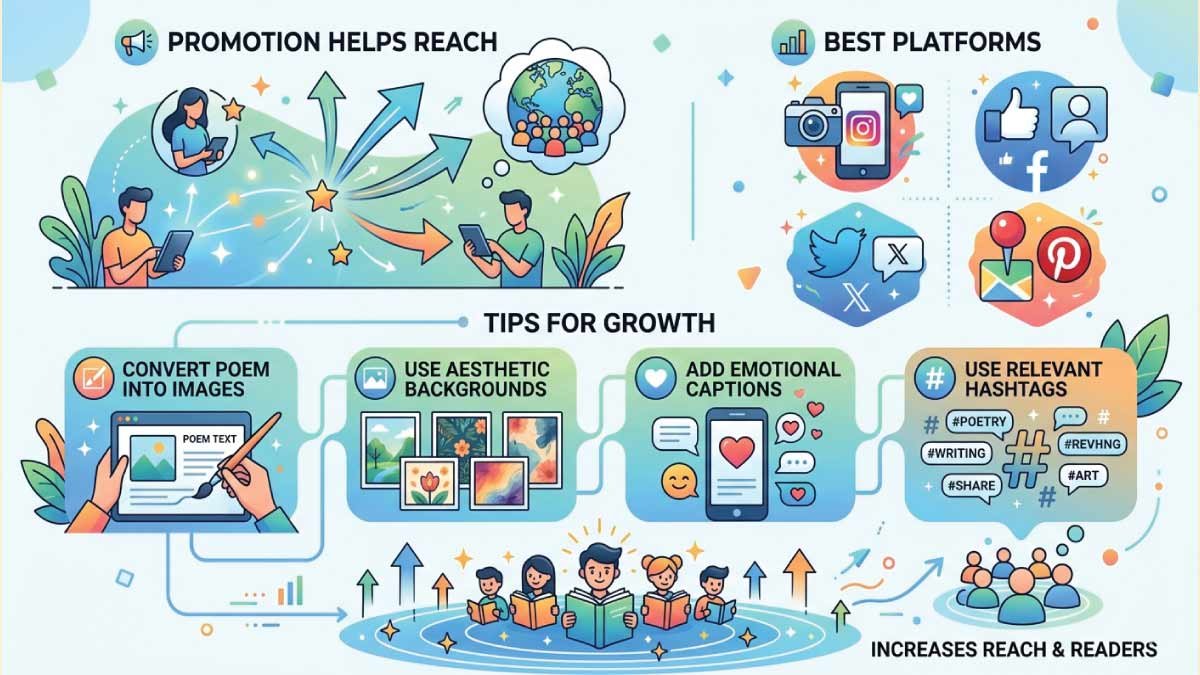
Publishing alone is not enough if you want readers. Promotion helps your poem reach people who may never find it through search. Social media can create quick visibility, emotional sharing, and opportunities for your work to spread naturally.
Best platforms for sharing:
- Twitter (X)
Tips for Viral Growth
Social platforms reward content that is easy to consume and visually attractive. Turning your poem into shareable formats can increase attention, clicks, and engagement. Even a short emotional line can encourage readers to share your work.
- Convert your poem into images
- Use aesthetic backgrounds
- Add emotional captions
- Use relevant hashtags
This increases your reach and brings more readers to your poem.
Step 9: Build Your Poetry Audience
If you want lasting success, focus on building an audience instead of publishing only once. Loyal readers often return for new poems, share your work with others, and gradually help your platform grow through trust and connection.
Engage with Readers
Interaction builds community. When readers comment or respond, reply thoughtfully. Conversations make readers feel valued and encourage them to return. Feedback can also help you understand which themes or emotions connect most strongly.
- Reply to comments
- Ask for feedback
- Join writing communities
Post Regularly
Consistency matters more than speed. Publishing regularly keeps your audience engaged and signals that your platform is active. Over time, regular posting helps build familiarity, trust, and stronger visibility across search engines and social platforms.
Consistency builds trust and visibility.
Create a Poetry Brand
A clear identity helps readers remember you. Using the same name, tone, and theme across platforms makes your poetry feel recognizable. A focused niche also makes it easier to attract the right audience.
- Use same name everywhere
- Maintain writing style
- Focus on a niche (love poetry, sad poetry, motivational poetry)
Step 10: Monetize Your Poetry Online
Once your poetry starts getting readers and traffic, you can begin earning from your work. Monetization usually grows over time, but consistent publishing and audience building can turn poetry into a meaningful source of online income.
Monetization Methods
Different income options suit different types of writers. Some poets prefer ad revenue, while others focus on selling products or building community support. You can experiment and choose what fits your goals and audience best.
- Google AdSense on blog
- Sponsored posts
- Selling poetry ebooks
- Patreon or memberships
- Affiliate marketing (for writing tools)
Many poets today earn a full-time income online by publishing consistently.
Also Read:
Common Mistakes to Avoid
Many new poets publish quickly without paying attention to details that affect visibility and reader experience. Small mistakes can reduce trust, limit reach, and make readers leave early. Avoiding these common problems will give your poetry a stronger chance of being discovered and appreciated.
Avoid these errors when publishing poetry online:
- Copying others’ poems
- Poor formatting
- Ignoring SEO
- Not promoting content
- Publishing without editing
These mistakes reduce visibility and reader engagement.
Final Thoughts
Publishing poetry online is more accessible than ever. You no longer need a publisher or a large audience to begin. With the right platform, clear formatting, and basic SEO knowledge, your poem can reach readers across the world within minutes of publishing.
Growth usually does not happen with a single post. It comes from consistency, patience, and improving over time. The more you write, publish, and share, the more opportunities you create for readers to discover your voice and connect with your words.
Your poetry can inspire, comfort, heal, and create emotional connection. Every poem carries a feeling that may speak deeply to someone else. Instead of keeping your work hidden, publish it, share it, and allow readers around the world to experience your voice.
FAQs:
What is the best way to publish your poem online?
The best way to publish your poem online is to choose the right platform such as a blog, writing website, or social media. Make sure your poem is well-edited and properly formatted. Consistent posting and engaging with readers can help you build an audience and improve visibility over time.
Which platforms are best for publishing poetry online?
Popular platforms for publishing poetry online include personal blogs, Medium, Wattpad, and social media platforms like Instagram and TikTok. Each platform offers different benefits such as audience reach or creative freedom. Choosing the right platform depends on your goals, whether it is exposure, engagement, or building a writing portfolio.
Do I need to copyright my poem before publishing online?
You automatically own the copyright of your poem once you write it, but registering it can provide extra legal protection. If you are concerned about misuse, you can publish with your name clearly mentioned. Some writers also use watermarks or official registration to protect their creative work online.
How can I make my poem stand out online?
To make your poem stand out, focus on originality, emotional depth, and strong language. Use eye-catching formatting and pair your poem with visuals or videos if possible. Writing meaningful captions and using relevant hashtags can also help attract more readers and increase engagement on online platforms.
Can I earn money by publishing poetry online?
Yes, you can earn money by publishing poetry online through ads, sponsored content, selling ebooks, or offering paid subscriptions. Some platforms also allow monetization based on views or engagement. Building a loyal audience is important, as income opportunities grow as your reach and popularity increase over time.
How often should I post poetry online?
Posting consistently is key to growing your audience. You can start by publishing one to three poems per week. Regular posting keeps your audience engaged and helps improve visibility on platforms. It is important to maintain quality while being consistent, so readers continue to connect with your work.