
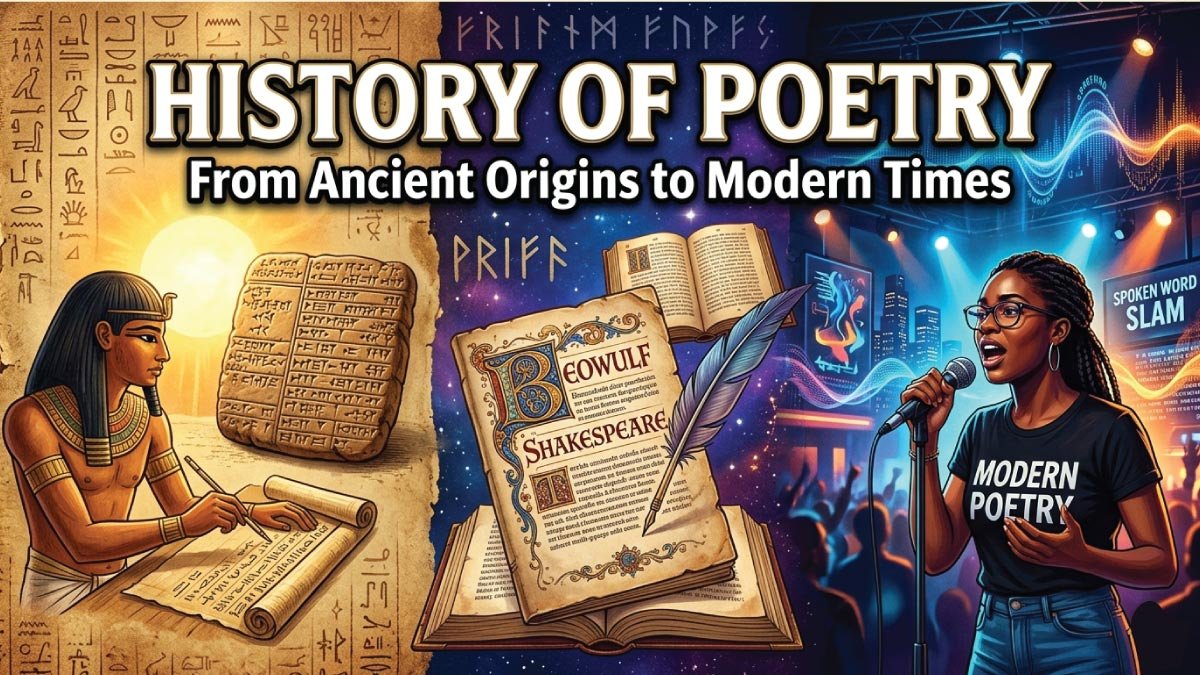
Poetry Is One of the Oldest Forms of Human Expression, Poetry is among the earliest ways human beings expressed thoughts, feelings, and shared experiences. Long before written language developed, people used rhythm, sound, and storytelling to communicate memory, emotion, belief, and imagination. Across centuries, poetry has grown through different cultures, languages, and civilizations, becoming one of humanity’s most enduring artistic forms.
Understanding the history of poetry helps us see how deeply connected it is to human life and culture.
The Origins of Poetry in Ancient Times
The roots of poetry reach back to prehistoric communities, long before formal writing systems existed. In early societies, people depended on spoken language to preserve knowledge. Rhythm and repetition made words easier to remember, which is why poetic speech became an important way to pass ideas across generations.
Poetry was not only artistic expression. It also served practical purposes. Through repeated lines, sound patterns, and memorable phrases, communities could remember stories, beliefs, and lessons that shaped daily life and collective identity.
Oral Tradition
In ancient civilizations, poetry was primarily spoken rather than written. It was recited, sung, or performed before groups of listeners. This method of passing knowledge by voice from one generation to another is known as oral tradition.
People used poetry to:
- Preserve history
- Share myths and legends
- Teach moral lessons
- Celebrate victories and rituals
Because there were no printed books, poetry helped communities remember important information. The rhythm, repetition, and musical quality of spoken verse made stories easier to retain and repeat accurately over long periods of time.
These early poetic forms were often accompanied by music, drums, or dance.
Poetry in Ancient Civilizations
Poetry in ancient civilizations represents the earliest form of literary expression ever recorded in human history. As writing systems developed across different regions of the world, poetry became a powerful tool to record stories, beliefs, emotions, and cultural values. It was not only an art form but also a way to preserve knowledge and tradition.
1. Ancient Mesopotamia
Ancient Mesopotamia is often considered one of the birthplaces of written poetry. One of the most famous early literary works is the Epic of Gilgamesh, which is regarded as one of the oldest known poems in human history. It tells the story of a heroic king who searches for meaning, friendship, and immortality.
This epic shows that even early poetry explored deep human emotions such as fear of death, love, and the desire for purpose. It also reflects how poetry was used to express philosophical ideas and human struggles in ancient times.
2. Ancient Egypt
In ancient Egypt, poetry played an important role in religion, culture, and royal life. It was commonly used in religious hymns dedicated to gods and spiritual beliefs. These poems were often written on temple walls, papyrus scrolls, and tombs.
Egyptian poetry also included love songs and royal praise poems that honored kings and queens. Much of this poetry focused on nature, divinity, and the afterlife, showing the Egyptians’ strong spiritual connection with life beyond death.
3. Ancient India
Ancient Indian poetry has one of the richest and oldest traditions in the world. It began with sacred texts known as the Vedas, which were written in Sanskrit. These hymns were used in religious ceremonies and carried deep spiritual meaning.
Over time, great epic poems such as the Mahabharata and Ramayana were created. These works are not only literary masterpieces but also important cultural and moral guides. They explore themes of duty, righteousness, heroism, and human values.
4. Ancient China
Chinese poetry has a long and respected history that dates back thousands of years. Early Chinese poets focused on simplicity, nature, and emotional expression. Their poems often reflected harmony between humans and the natural world.
During the Tang Dynasty, poetry reached its golden age and became one of the highest forms of art. Poets expressed deep feelings using short, elegant, and meaningful lines. Chinese poetry is known for its balance, beauty, and philosophical depth.
Across all these ancient civilizations, poetry served as more than just artistic writing. It was a powerful medium for storytelling, spiritual expression, cultural preservation, and emotional reflection. Even today, these early poetic traditions continue to influence modern literature and inspire poets around the world.
Classical Greek and Roman Poetry
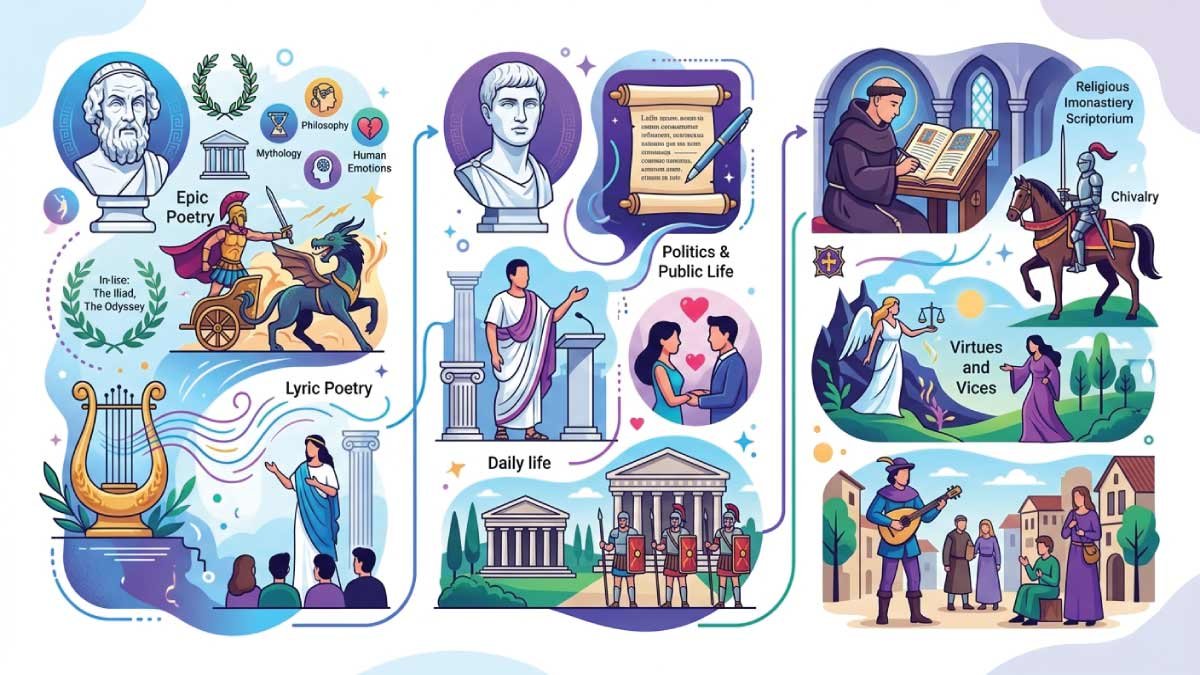
The classical period played a major role in shaping poetry as we know it today. Many ideas about structure, storytelling, rhythm, and poetic themes developed during this time. The influence of classical poetry can still be seen in modern literature, education, and creative writing across the world.
1. Greek Poetry
Ancient Greece produced some of the most influential poets in literary history. Greek poetry explored both human experience and the world of gods, heroes, and destiny. It often combined storytelling with philosophical reflection, emotional depth, and cultural values that shaped later poetic traditions.
Greek poetry often focused on:
- Mythology
- Heroism
- Philosophy
- Human emotions
Famous poets like Homer wrote epic works such as The Iliad and The Odyssey.
These poems were more than entertainment. They preserved cultural memory, explained beliefs about honor and fate, and passed important stories from one generation to another through powerful spoken performance.
2. Roman Poetry
Poetry in ancient Rome was deeply influenced by Greek traditions, but Roman writers gradually developed their own voice and style. Their poetry often reflected public life, political power, personal relationships, and the everyday experiences of society.
Roman poets wrote about:
- Love
- Politics
- War
- Daily life
Poets like Virgil and Ovid helped shape Western literary traditions.
Roman poetry also placed strong emphasis on language, structure, and artistic refinement. Through carefully crafted verse, Roman poets influenced later generations of writers throughout Europe and became an important foundation of classical literature.
3. Medieval Poetry
During the Middle Ages, poetry became closely connected with religion, storytelling, and social values. It was often used to teach moral ideas, celebrate heroic behavior, and communicate spiritual meaning. Poetry during this period was both artistic expression and cultural instruction.
Characteristics of Medieval Poetry
- Religious themes
- Chivalry and knights
- Moral lessons
- Allegorical storytelling
In Europe, poets increasingly began writing in local spoken languages instead of Latin. This made poetry more accessible to ordinary people and allowed regional traditions, voices, and stories to develop more strongly across different communities.
The Renaissance Period of Poetry
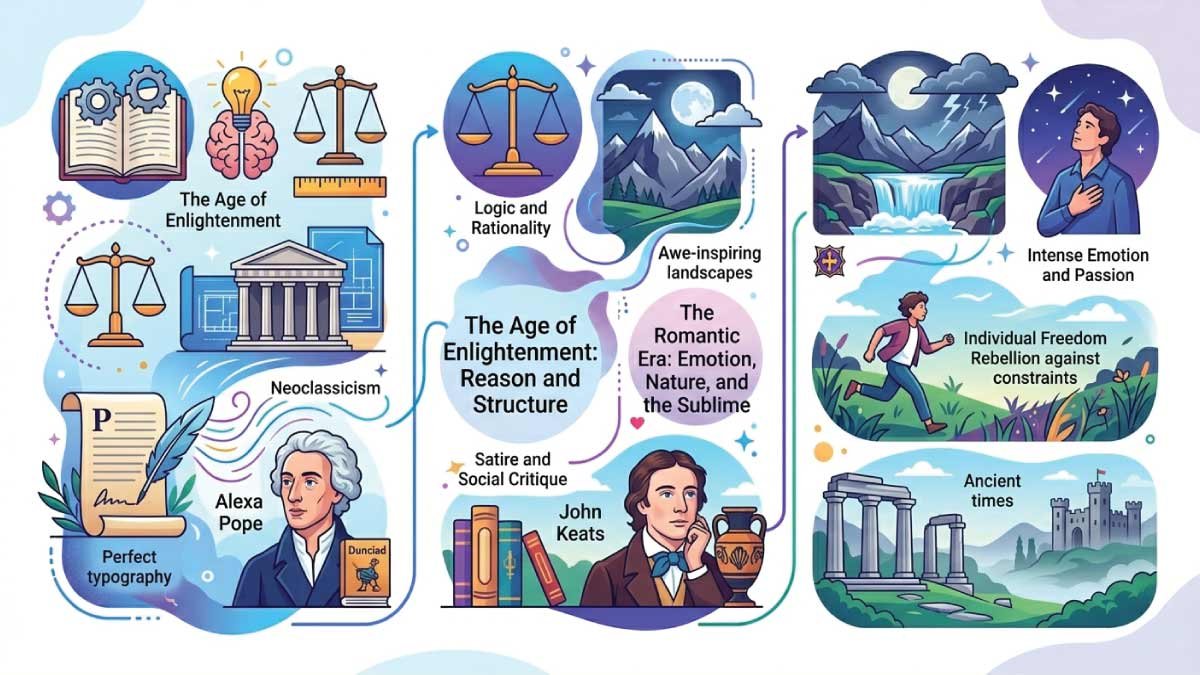
The Renaissance period marked a major shift in the history of poetry, bringing a renewed focus on human potential, creativity, and intellectual growth. This era moved away from purely religious themes and began celebrating human life, beauty, and individual expression in a more artistic and structured way.
Poets started exploring deeper emotions and expressing thoughts in more refined and imaginative forms. The influence of classical Greek and Roman literature also returned strongly during this time, shaping poetic structure and style.
Key Features:
- Exploration of human emotions
- Love and beauty themes
- Artistic creativity
- Revival of classical ideas
One of the most influential figures of this period was William Shakespeare, whose sonnets and dramatic verse reshaped poetry and literature. His work combined emotional depth with powerful language, and it continues to be studied and admired around the world today.
Romantic Era Poetry
The Romantic period, which developed during the late 18th and early 19th centuries, brought a strong shift toward emotion, imagination, and personal expression. Poets of this era rejected strict rules and focused more on feelings, nature, and inner experience.
This movement placed the individual at the center of poetry, emphasizing personal voice and emotional freedom rather than formal structure.
Main Ideas in Romantic Poetry:
- Deep emotional expression
- Connection with nature
- Individual freedom
- Mystery and imagination
Poets like William Wordsworth and John Keats focused on human feelings, natural beauty, and the power of imagination.
This era made poetry more personal and emotional, allowing poets to express inner thoughts and experiences in a more natural and heartfelt way.
Modern Poetry
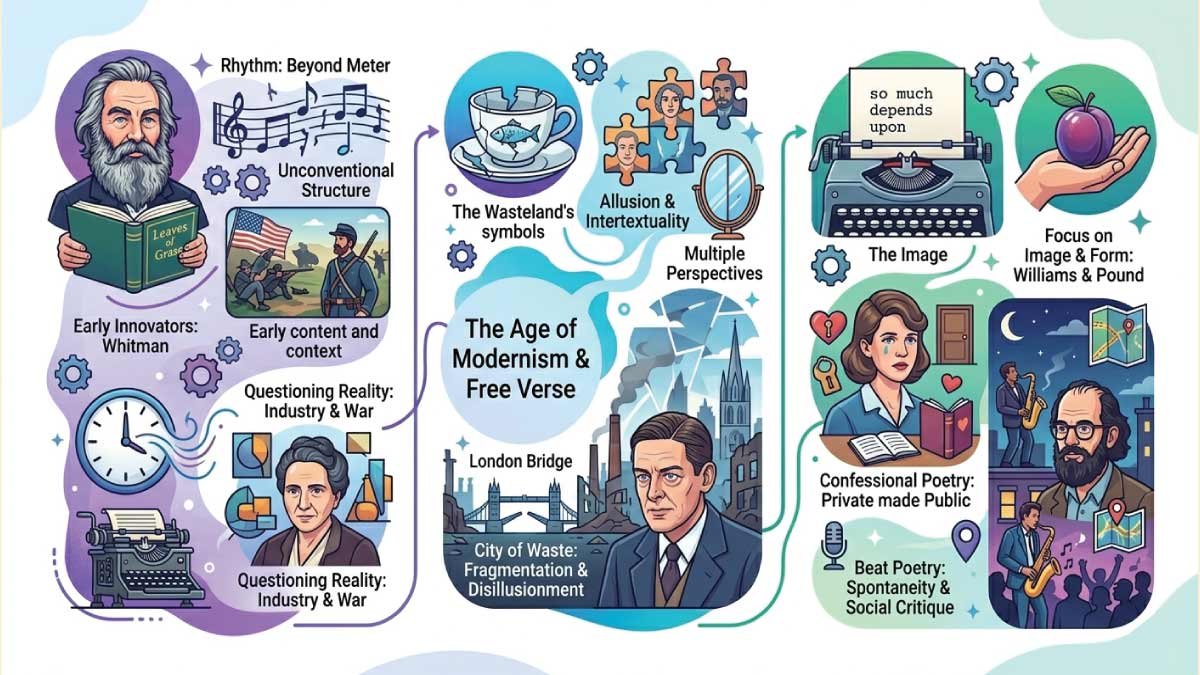
Modern poetry began developing in the late 19th and 20th centuries as writers started moving away from traditional poetic rules. Instead of following strict rhyme schemes and fixed structures, poets experimented freely with language, form, and expression. This shift allowed poetry to become more natural, flexible, and reflective of real life experiences.
Modern poets focused more on individual perspective and everyday realities rather than idealized themes. The language became simpler, more direct, and easier for readers to understand. At the same time, the emotional and psychological depth of poetry increased, making it more personal and thought-provoking.
Features of Modern Poetry:
- Free verse (no fixed rhyme)
- Simple language
- Urban and social themes
- Psychological depth
During this period, poets explored complex subjects such as war, identity, technology, and society. These themes reflected the rapidly changing world and human experiences shaped by industrialization, conflict, and modern life.
Modern poetry became more flexible and expressive than ever before, giving poets complete freedom to shape their voice and style.
Contemporary Poetry (Digital Age)
Contemporary poetry represents the latest stage in poetic evolution, strongly influenced by digital technology and social media. In today’s world, poetry is no longer limited to books or literary journals. It is now widely shared online, reaching global audiences instantly.
This digital shift has changed both how poetry is created and how it is consumed. Short-form content, visual storytelling, and mobile-friendly formats have made poetry more accessible, especially to younger generations.
New Forms of Poetry:
- Instagram poetry
- TikTok poetry
- Spoken word performances
- Micro-poetry (short lines)
Platforms like Instagram and TikTok have made poetry more accessible to younger audiences by combining text with visuals, audio, and video. This combination increases emotional impact and engagement.
Now, anyone can write, publish, and share poetry instantly with a global audience, making poetry one of the most open and widely accessible art forms in the digital era.
The Role of Poetry Across History
Throughout human history, poetry has consistently served as a powerful tool for communication, culture, and emotional expression. It has existed in every civilization in some form, reflecting how people think, feel, and understand the world around them. Poetry is not just an art form—it is also a record of human experience across time.
Poetry has been used for:
- Storytelling
- Emotional expression
- Cultural preservation
- Political messages
- Spiritual guidance
Despite changes in style, language, and structure, its core purpose has remained the same: to express what ordinary language cannot fully capture. Poetry allows emotions, ideas, and experiences to be communicated in a deeper and more meaningful way than everyday speech.
Why Poetry Still Matters Today
Even in the fast-paced digital world, poetry continues to hold strong emotional and cultural value. While technology has changed how we share and consume content, the need for emotional expression remains unchanged. Poetry still provides a space for reflection, understanding, and connection in a world that often feels overwhelming.
Reasons poetry is still important:
- It connects people emotionally
- It helps express complex feelings
- It preserves culture and identity
- It inspires creativity
- It heals emotional pain
Poetry also gives people a voice when ordinary language feels insufficient. Whether someone is experiencing joy, sadness, love, or loss, poetry offers a structured yet creative way to process and express those emotions.
Poetry continues to evolve, but its emotional core stays unchanged. No matter how modern its form becomes, the feeling behind it remains deeply human.
Final Thoughts
The history of poetry reflects the history of human expression itself. From ancient oral traditions shared around fires to written epics on parchment, and now to digital poems shared instantly across social media, poetry has constantly adapted to time, culture, and technology.
Whether written in ancient epics or shared on TikTok today, poetry remains a timeless bridge between human emotions and artistic expression. It connects generations, cultures, and individuals through shared feelings and universal experiences.
It proves that no matter how much the world changes, the need to express emotions through words will always remain.
FAQs:
What is the history of poetry?
The history of poetry dates back thousands of years to ancient civilizations where it was first shared orally. Early poetry was used to tell stories, record events, and express beliefs. Over time, it evolved into written forms and became an important part of literature across cultures and generations.
Where did poetry first originate?
Poetry is believed to have originated in ancient civilizations like Mesopotamia, Egypt, India, and China. Early poems were often part of religious rituals and storytelling traditions. Works like the Epic of Gilgamesh show how poetry was used to explore human emotions, heroism, and the meaning of life.
How did poetry evolve over time?
Poetry evolved from oral traditions to written literature as writing systems developed. Different cultures introduced unique styles, structures, and themes. Over centuries, poetry moved from strict forms like epics and sonnets to modern free verse, allowing poets more freedom to express ideas creatively.
What role did poetry play in ancient times?
In ancient times, poetry played a major role in preserving history, culture, and religious beliefs. It was used in ceremonies, storytelling, and education. Since many people could not read or write, poetry helped pass knowledge through generations using memory, rhythm, and repetition.
What are some famous ancient poetic works?
Some famous ancient poetic works include the Epic of Gilgamesh from Mesopotamia, the Vedas from India, and classic Chinese poetry from early dynasties. These works reflect cultural values, spiritual beliefs, and human experiences, and they continue to influence literature even today.
Why is the history of poetry important?
The history of poetry is important because it shows how human expression has developed over time. It helps us understand different cultures, beliefs, and emotions from the past. Studying poetry’s history also reveals how language and artistic styles have evolved across different societies and generations.