
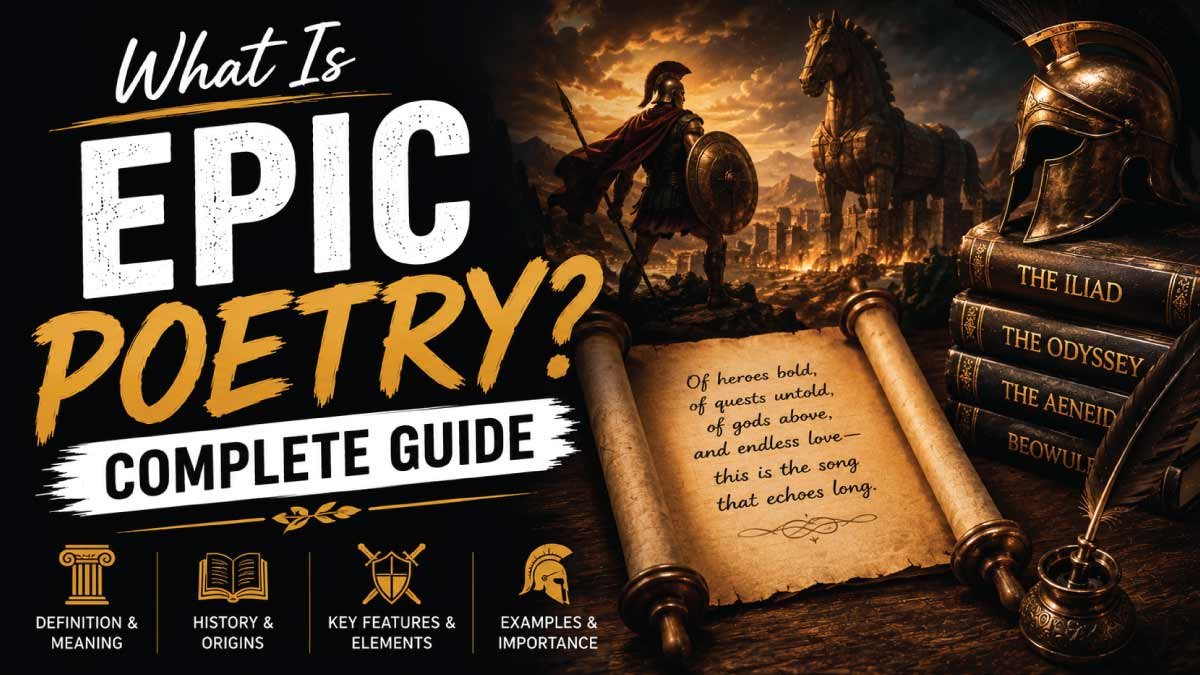
Epic poetry is a long form of narrative poetry that tells the story of heroic characters, great adventures, important historical events, or legendary battles. These poems are usually grand in style and often focus on themes such as courage, honor, war, destiny, and the struggle between good and evil.
Epic poetry has existed for thousands of years and is considered one of the oldest forms of literature in human history. Ancient civilizations used epic poems to preserve stories, traditions, and cultural values before written books became common.
In simple words, an epic poem is a long story written in poetic form that usually follows the journey of a hero.
Simple Definition of Epic Poetry
Epic poetry is a long narrative form of poetry that tells the story of heroic deeds, great adventures, and significant historical or mythical events. It is written in a grand, elevated style and often focuses on a central hero who faces extraordinary challenges and plays an important role in shaping events.
Epic poetry is:
- A long narrative poem
- Focused on heroic actions
- Often based on myths or history
- Written in an elevated or grand style
- Filled with adventure, conflict, and important themes
Main Features of Epic Poetry
Epic poems have distinct characteristics that separate them from other types of poetry. These features help create a sense of scale, importance, and dramatic storytelling.
1. A Heroic Main Character
Epic poetry usually revolves around a central hero who possesses exceptional strength, intelligence, bravery, or leadership qualities. This hero often represents ideal human values and is tested through difficult journeys and challenges.
The hero often faces difficult challenges and dangerous journeys that test their courage and determination.
Example
In The Odyssey, the hero Odysseus struggles for years to return home after the Trojan War, facing countless obstacles along the way.
2. A Grand Setting
Epic poetry takes place in large, expansive, and often dramatic settings. These locations emphasize the scale and importance of the story, making the hero’s journey feel vast and significant.
Epic poems often include settings such as:
- Kingdoms
- Oceans
- Battlefields
- Mountains
- Ancient cities
- Supernatural worlds
The story may even travel across multiple lands or worlds, showing the hero’s long and difficult journey.
3. Supernatural Elements
Many epic poems include gods, mythical creatures, or supernatural forces that influence events. These elements add drama and highlight the idea that the hero’s journey is larger than ordinary human experience.
Example
In The Iliad, Greek gods actively interfere in human battles and influence the outcomes of war.
4. Themes of Courage and Honor
Epic poetry often explores powerful and universal themes that reflect human struggle, values, and destiny. These themes give the story emotional and moral depth.
Common themes include:
- Heroism
- Sacrifice
- Loyalty
- Destiny
- War
- Good versus evil
- Survival
The hero’s actions often affect not just themselves, but entire nations or civilizations.
5. Elevated Language
Epic poems use formal, expressive, and highly descriptive language to create a sense of grandeur. The style is designed to make events feel important and memorable.
Poets often use:
- Long speeches
- Detailed descriptions
- Similes and metaphors
- Repetition for emphasis
This elevated language gives epic poetry its powerful and majestic tone.
History of Epic Poetry
Epic poetry has ancient origins and is one of the earliest forms of storytelling in human civilization. Before writing systems became common, epic poems were passed down orally from generation to generation. Storytellers and poets would recite these long narratives to audiences, often with rhythm and repetition to help memorization.
These stories were not only entertainment—they also preserved cultural beliefs, religious values, and historical events. Through epic poetry, ancient societies recorded their understanding of heroism, gods, and human struggle.
Ancient civilizations that produced famous epics include:
- Greek civilization
- Roman civilization
- Indian civilization
- Mesopotamian civilization
Over time, epic poetry became one of the foundational forms of world literature, influencing storytelling traditions across cultures.
Famous Examples of Epic Poetry
Many epic poems are still studied today because of their artistic, cultural, and historical importance. These works shaped literary traditions and continue to influence modern storytelling.
The Odyssey
The Odyssey is one of the most famous epic poems in history. Traditionally attributed to Homer, it tells the story of Odysseus and his long, challenging journey home after the Trojan War.
The poem includes:
- Sea monsters
- Magical islands
- Gods and goddesses
- Dangerous adventures
It explores themes of perseverance, intelligence, loyalty, and survival, making it one of the most enduring epics in literature.
The Iliad
The Iliad focuses on the Trojan War and the warrior Achilles. It is one of the oldest surviving works of Western literature and highlights the intense emotions and conflicts of war.
It explores themes of:
- Anger
- Honor
- War
- Pride
- Fate
The poem shows how personal emotions and divine forces influence human destiny.
Paradise Lost
Paradise Lost is a famous English epic written by John Milton. Unlike ancient epics, it is deeply religious in nature and explores moral and spiritual themes.
The poem tells the biblical story of the fall of humanity and the rebellion of Satan, focusing on themes of obedience, free will, and the struggle between good and evil.
Mahabharata
Mahabharata is one of the longest epic poems ever written and one of the most important works in Indian literature and culture. It is not only a story of war but also a deep exploration of life, ethics, and human relationships.
It contains stories about:
- War
- Morality
- Family conflict
- Duty
- Spiritual teachings
The epic reflects complex human emotions and philosophical ideas, making it both a literary and spiritual text.
Beowulf
Beowulf is an Old English epic that tells the story of a heroic warrior named Beowulf. He is known for his courage and strength as he battles terrifying monsters and later a deadly dragon.
The poem highlights bravery, leadership, and the struggle between good and evil, making it one of the most important works in early English literature.
Characteristics of an Epic Hero
Epic heroes are not ordinary characters—they represent ideal human qualities and often perform extraordinary deeds. They face extreme challenges that test their courage, intelligence, and moral strength.
An epic hero usually has:
- Exceptional bravery
- Strong leadership
- Great physical strength
- Intelligence
- Loyalty
- Determination
The hero often faces impossible challenges but continues fighting despite fear and danger.
Also Read:
Structure of Epic Poetry
Epic poems are typically long and organized into clear sections that follow the hero’s journey. This structure helps build suspense and gives the story a clear narrative flow.
The structure may include:
- Introduction
- Hero’s journey
- Conflict or war
- Challenges and obstacles
- Climax
- Resolution
Some epics contain thousands of lines, making them some of the longest literary works in history.
Oral Tradition in Epic Poetry
Before the invention of writing and printing systems, epic poems were passed down through oral storytelling. Poets and storytellers memorized long narratives and performed them in front of audiences.
Because of this oral tradition, epic poems often include:
- Repeated phrases
- Rhythmic patterns
- Memorable descriptions
These techniques made the poems easier to remember and helped preserve them across generations.
Difference Between Epic Poetry and Other Poetry
Epic poetry is different from shorter lyric or emotional poems.
| Epic Poetry | Lyric Poetry |
|---|---|
| Long narrative story | Short emotional expression |
| Focuses on heroes and adventures | Focuses on personal feelings |
| Grand scale | Personal scale |
| Includes action and conflict | Often reflective or emotional |
| Complex plot | Simpler structure |
Themes Commonly Found in Epic Poetry
Epic poetry is known for exploring deep and universal human experiences. These themes are not limited to one culture or time period, which is why epic poems remain meaningful even today. They reflect struggles, values, and emotions that are common across all human societies.
Common themes include:
- Heroism
- Sacrifice
- War
- Honor
- Destiny
- Revenge
- Faith
- Leadership
- Survival
- Human weakness
These themes give epic poetry its timeless quality and emotional depth, allowing readers from different backgrounds to connect with the story.
Why Epic Poetry Is Important
Epic poetry plays a major role in preserving the history, culture, and values of ancient civilizations. These long narrative poems are not only literary works but also historical and cultural records that reflect how people once understood the world.
Epic poems teach readers about:
- Ancient civilizations
- Human emotions
- Moral lessons
- Historical beliefs
- Storytelling traditions
They also have a strong influence on modern storytelling, especially in literature and cinema. Many books, films, and fantasy stories today still follow epic structures and themes.
Also Read:
Epic Poetry in Modern Literature
Although classical epic poems belong to ancient times, the influence of epic storytelling continues strongly in modern literature. Writers today still use epic-style structures to create large, meaningful, and emotionally powerful stories.
Many modern fantasy novels and films include epic elements such as:
- Heroic journeys
- Battles
- Large and complex worlds
- Magical powers
- Good versus evil conflicts
Modern stories inspired by epic traditions often attract large audiences because they combine adventure, emotion, and universal themes that people continue to enjoy across generations.
How to Write Epic Poetry
Writing epic poetry requires imagination, strong storytelling skills, and the ability to build meaningful themes. Unlike shorter poems, epic poetry focuses on long narratives, heroic journeys, and larger-than-life events. A good epic poem combines emotion, action, and moral depth.
Choose a Hero
Every epic poem begins with a central hero. This character is usually strong, determined, and guided by a powerful purpose or mission. The hero should face challenges that test their courage, intelligence, and values.
Create a main character with a powerful goal or mission that drives the entire story forward.
Build a Grand Adventure
Epic poetry is known for its large-scale storytelling. The hero’s journey should include challenges, conflicts, enemies, and long travels that test their limits and shape their destiny.
Include elements such as:
- Difficult challenges
- Powerful enemies
- Long journeys
- Emotional struggles
- Moments of conflict and decision
A grand adventure gives the poem depth and excitement.
Use Descriptive Language
Descriptive and vivid language is essential in epic poetry. It helps readers visualize scenes and feel the emotions of the story. Strong imagery makes the poem more engaging and memorable.
Epic poetry often includes detailed descriptions of:
- Battles
- Landscapes
- Emotions
- Characters
Include Themes
Themes give epic poetry meaning beyond just storytelling. They help connect the hero’s journey to universal human experiences and moral lessons.
Add meaningful themes such as:
- Courage
- Sacrifice
- Destiny
- Honor
- Good versus evil
- Leadership
These themes make the poem more powerful and timeless.
Create a Powerful Ending
The ending of an epic poem should feel meaningful and impactful. It often shows transformation, victory, loss, or an important lesson learned by the hero.
Epic poems usually end with:
- Victory
- Transformation
- Moral or life lessons
A strong ending leaves a lasting impression on the reader.
Also Read:
Common Literary Devices in Epic Poetry
Epic poets use literary devices to enhance storytelling, emotion, and rhythm. These techniques make the poem more expressive and engaging.
Simile
A simile compares two things using “like” or “as,” helping create vivid imagery.
Metaphor
A metaphor directly compares two things without using “like” or “as,” creating deeper symbolic meaning.
Repetition
Repetition is used to emphasize important ideas and create rhythm in long narrative poems.
Imagery
Imagery uses descriptive language to appeal to the senses, helping readers visualize scenes clearly.
Hyperbole
Hyperbole is exaggerated language used for dramatic effect, often highlighting the greatness of heroes or events.
Fun Facts About Epic Poetry
- Some epic poems contain thousands of lines
- Ancient epics were often sung aloud
- Epic poetry influenced theater, novels, and films
- Many cultures have their own epic traditions
Common Mistakes Beginners Make When Studying Epic Poetry
Thinking All Long Poems Are Epics
Not every long poem is an epic. A poem must include heroic narrative elements and a structured journey to be considered epic poetry.
Ignoring Historical Context
Epic poems often reflect the beliefs, traditions, and values of the societies in which they were created.
Confusing Mythology With Fiction
Many epic stories combine mythology with cultural and moral values, making them more than just fictional tales.
Final Thoughts
Epic poetry is one of the most powerful and influential forms of literature. These long narrative poems tell unforgettable stories about heroes, battles, adventures, and human struggles. Through epic poetry, ancient cultures preserved their history, beliefs, and traditions for future generations.
From The Odyssey to Beowulf, epic poems continue inspiring readers with themes of courage, sacrifice, and determination.
Understanding epic poetry helps readers appreciate the roots of storytelling and recognize how ancient narratives still influence modern literature and entertainment today.